Product Design
Polycarbonate Guardrail
Construction & Components
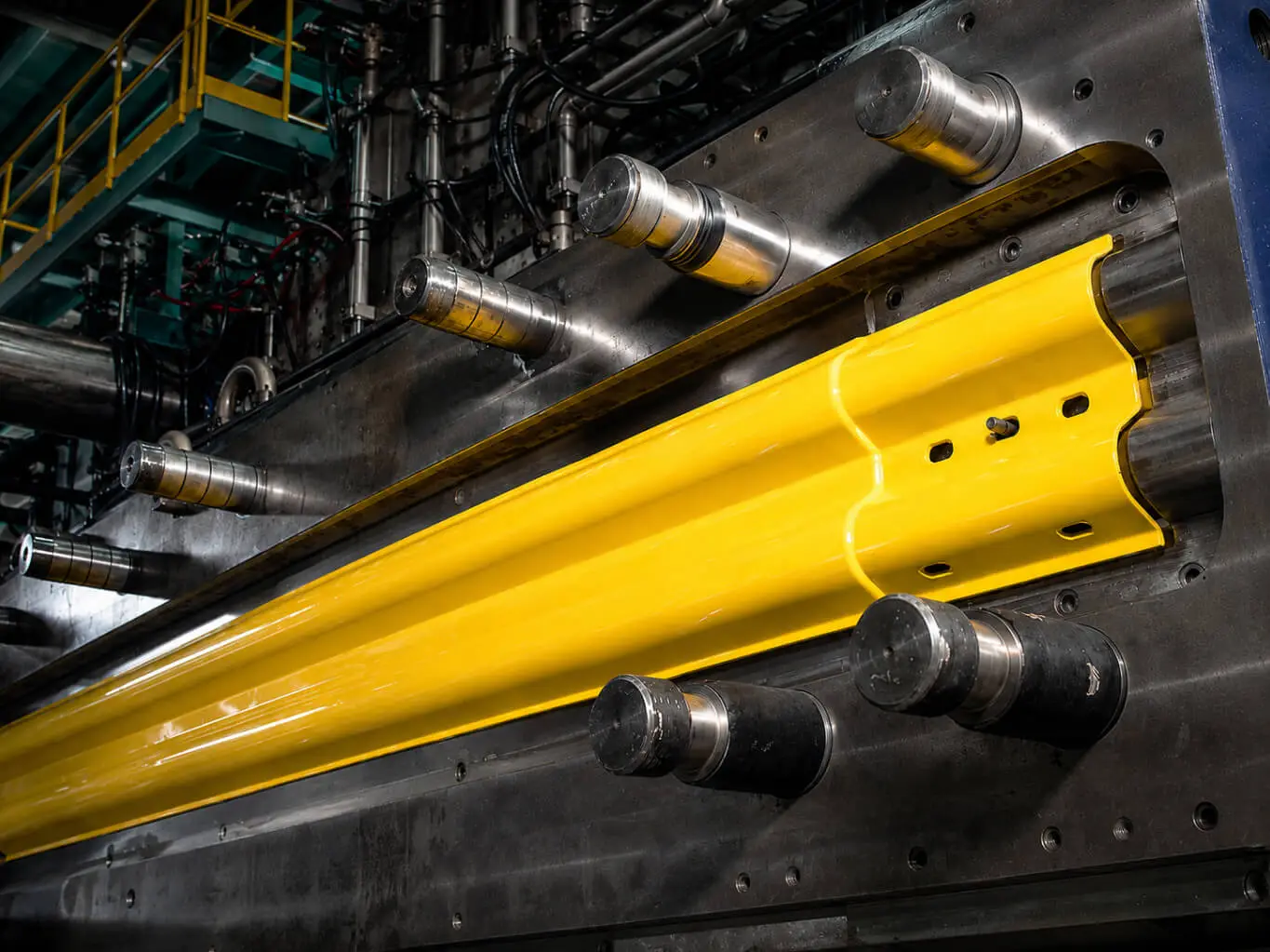
Each rail section is injection molded in polycarbonate as a single 4 meter part with a 6.8 mm wall and a 348 mm face. At 16.5 kg a section, two or three people can carry and position it by hand, and a full kilometer uses about 4,125 kg of material against roughly 16,250 kg for a 4 mm steel system.
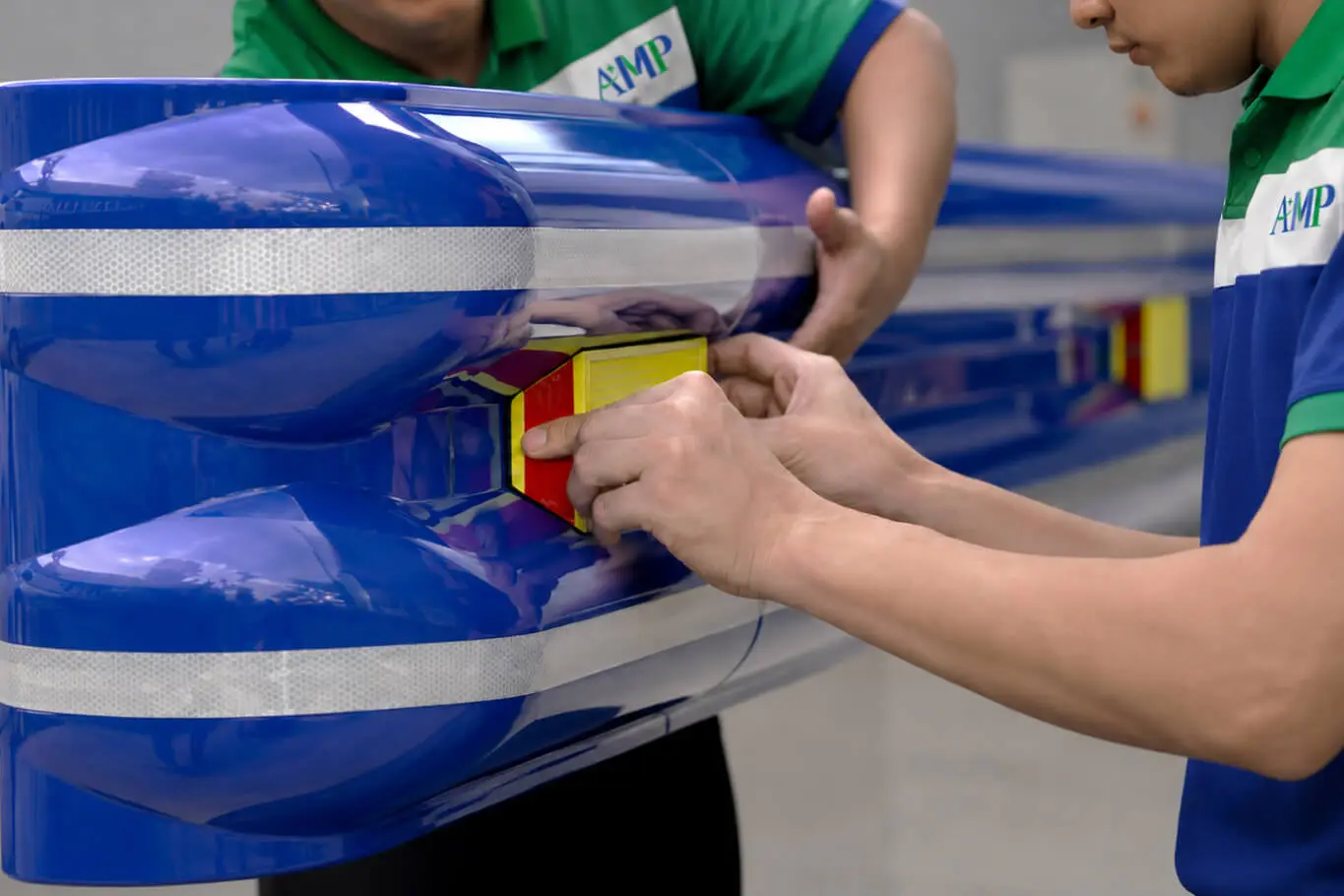
Sections mount on standard posts at 2 meter centers and ship as five parts: rail body, bracket, end terminal, reflector, and reflector base. Because the rail flexes, crews shape it to the road on site rather than pre-bending to surveyed angles.
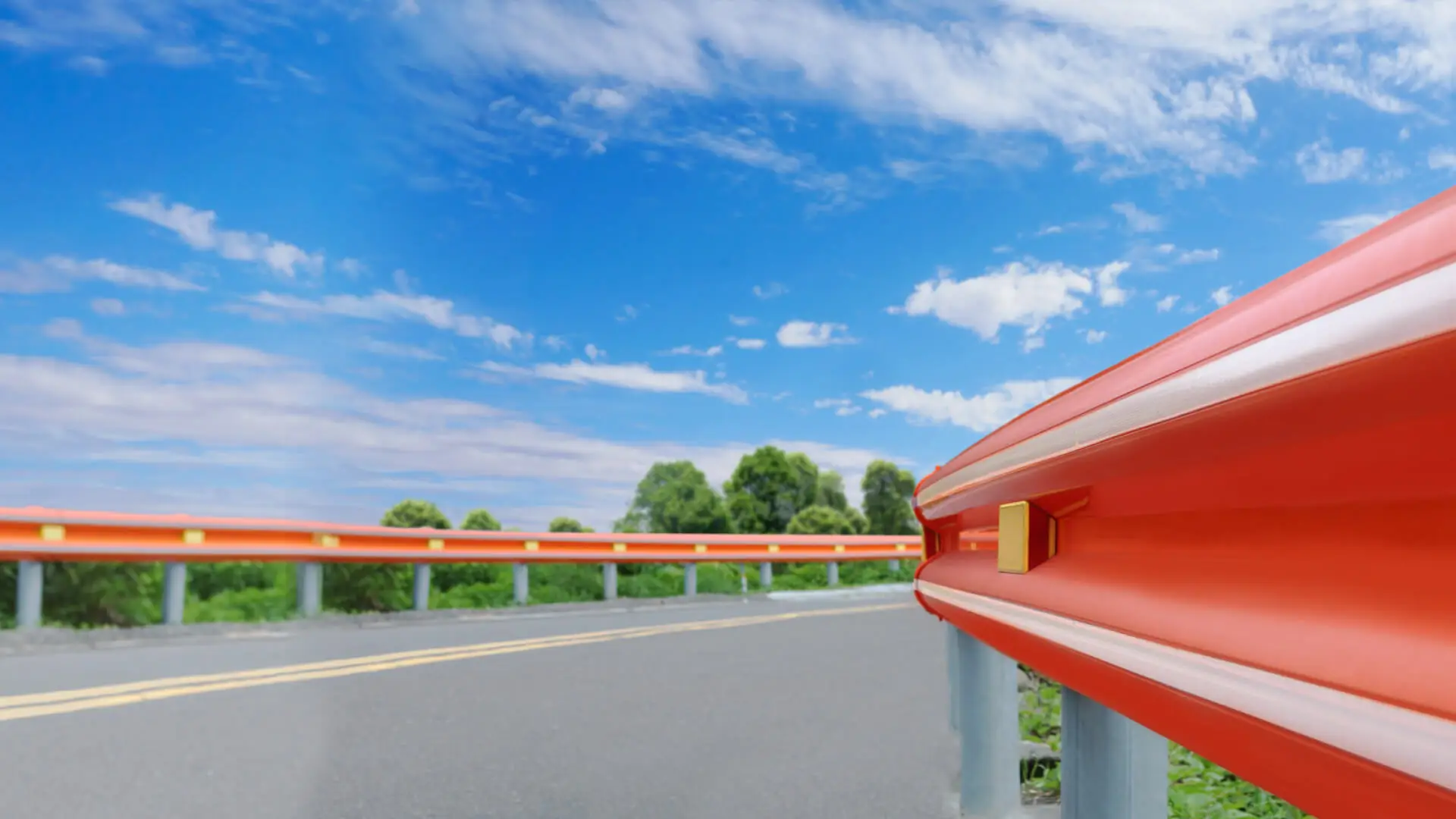
Color is molded in, not painted, using a grade 8 UV pigment of automotive quality, so there is no galvanizing or surface treatment to maintain, and you can specify the color to suit the setting. The directional reflector shows yellow with the flow of traffic and red against it, a warning cue a plain gray steel rail cannot give on mountain roads, in fog, or at ramps.
4 M SECTIONS
SINGLE-PIECE MOLDING
6.8 MM WALL
FLEXES ON IMPACT
16.5 KG PER SECTION
CARRIED BY HAND
Crash Testing
Independent Testing
To International Barrier Standards
Two independent laboratories have crash tested the ASP guardrail across three separate programs, all reporting in the name of Aplus Molds & Plastics. At Centro Prove AISICO in Italy it was tested to EN 1317-1 and EN 1317-2 as an N1 road safety barrier under a TB11 impact, a 1,500 kg vehicle at 80.4 km/h and 20.1 degrees. AISICO also tested it for motorcyclist protection to CEN/TS 17342:2019 and UNE 135900:2017, a credential few plastic barriers hold.
In China, Beijing Shenhuada tested it to the national highway barrier standard JTG B05-01-2013 across three impacts, a 10-tonne truck, a 10-tonne bus, and a car at 100.7 km/h, passing every evaluation item at Level A. It has also been certified for use in Malaysia and recently passed SGS weathering tests for 1000 and 1500 hours.
EN 1317-1 / EN 1317-2, N1 containment class (AISICO, Italy)
CEN/TS 17342:2019 and UNE 135900:2017 motorcyclist protection (AISICO, Italy)
JTG B05-01-2013 Level A (Beijing Shenhuada Traffic Engineering Test)
Installation & Lifecycle
Installation Cost
Maintenance & Environmental Impact
Installed cost runs roughly level with a steel system, but it sits differently. Over 500 meters our crews finish in 4 to 5 days with 2 to 3 people, against 7 to 9 days and 5 people for steel, and sections travel on an ordinary flatbed rather than a crane truck, cutting 30 to 40 percent from equipment costs. After handover the gap widens: a struck steel rail is dented and replaced outright, while polycarbonate absorbs the impact and recovers, so maintenance runs at roughly a tenth of steel's, with no rust and no galvanizing to renew.
The material also carries a lower footprint, 0.4 to 0.5 tonnes of CO2 per tonne of resin against about 1.7 tonnes for steel, with scrap recycled back into production and the rail fully recyclable at end of life.
And when steel is struck hard it can fold into a sharp edge causing severe risk for motorcyclists and drivers. The Ultra Tough Plastic Guardrail absorbs the impact of the vehicle, guides it and protects the motorists, enhancing their safety.
4 to 5 Day Install per 500 m
90% Maintenance Cost Saving
No Galvanizing
Fully Recyclable