

The Process
How Supercritical Physical Foaming Works
During injection, a supercritical fluid is mixed into the polymer melt until the two form a single-phase solution. When the melt enters the mold cavity, the pressure drop triggers nucleation, and millions of uniform micro-bubbles grow inside the part as it takes shape. The result is a solid outer skin with a microcellular foam core.
Because the process is physical rather than chemical, no blowing agents or additives are left in the finished part. Results depend on getting three elements right together: the foaming equipment, the material formulation, and the mold design. We control all three in-house, from mold building through molding and quality inspection.
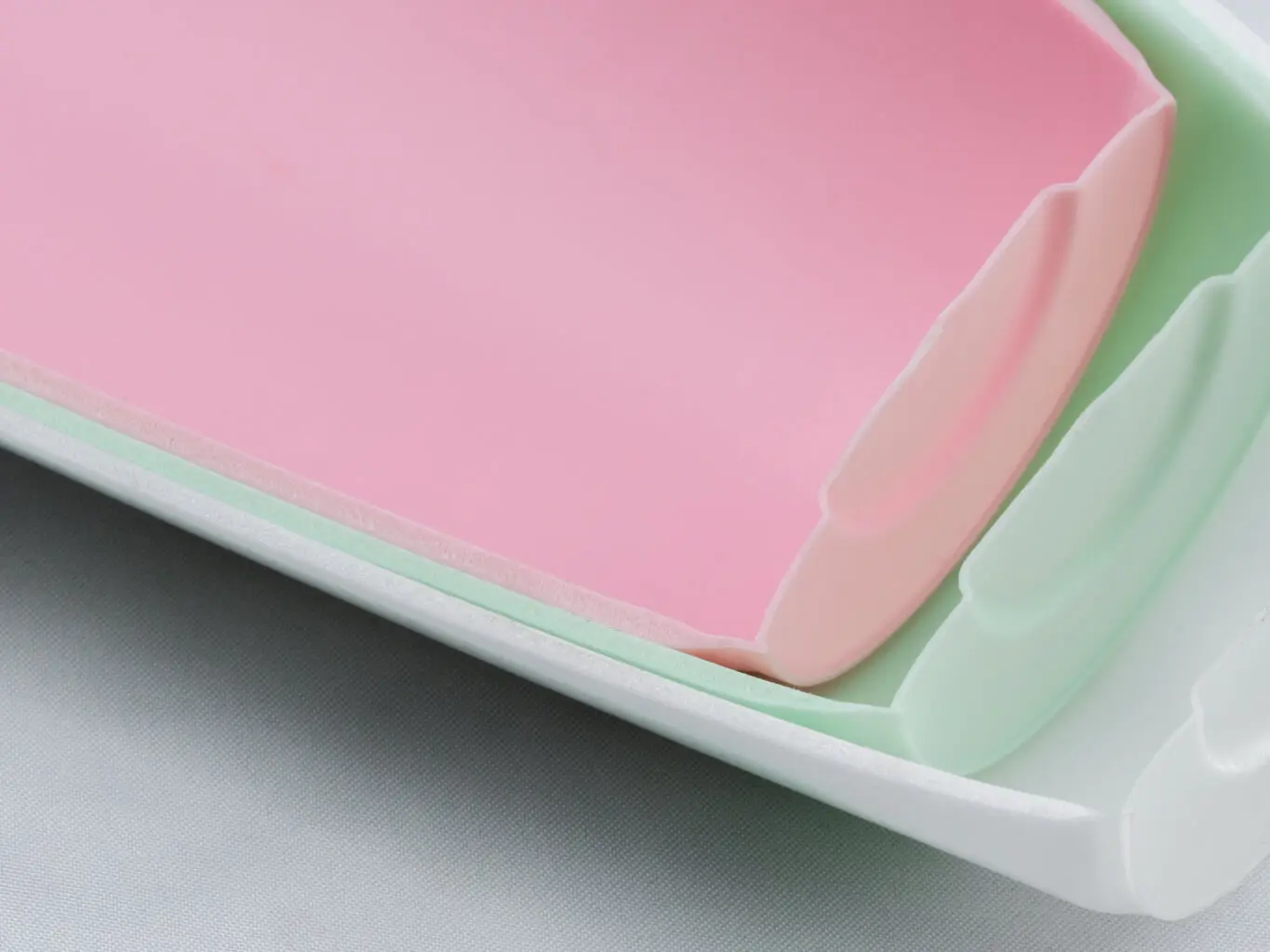
SUPERCRITICAL FOAMING
SOLID OUTER SKIN WITH FOAM CORE
LOWER CARBON FOOTPRINT
LIGHTER PARTS & DIMENSIONAL STABILITY
Why Foam
Benefits of Microcellular Foam Molding
Weight & Material Reduction
The foam core replaces solid plastic, cutting part weight and resin consumption while maintaining rigidity.
Thermal Insulation
The cellular structure slows heat transfer, keeping hot contents hot and cold contents cold for longer.
Dimensional Stability
Uniform internal pressure reduces warping and shrinkage variation, improving accuracy on flat and thin-walled parts.
Sound & Vibration Absorption
Foamed parts damp noise and rebound under compression, useful for mats, housings, and interior components.
No Sink Marks
Cell growth packs the part from within, preventing surface sink over ribs and thick sections.
Lower Carbon Footprint
Less resin per part means less CO2 per part, supporting your plastic reduction and ESG targets.
Proven Results
Measured Results
from Production Parts
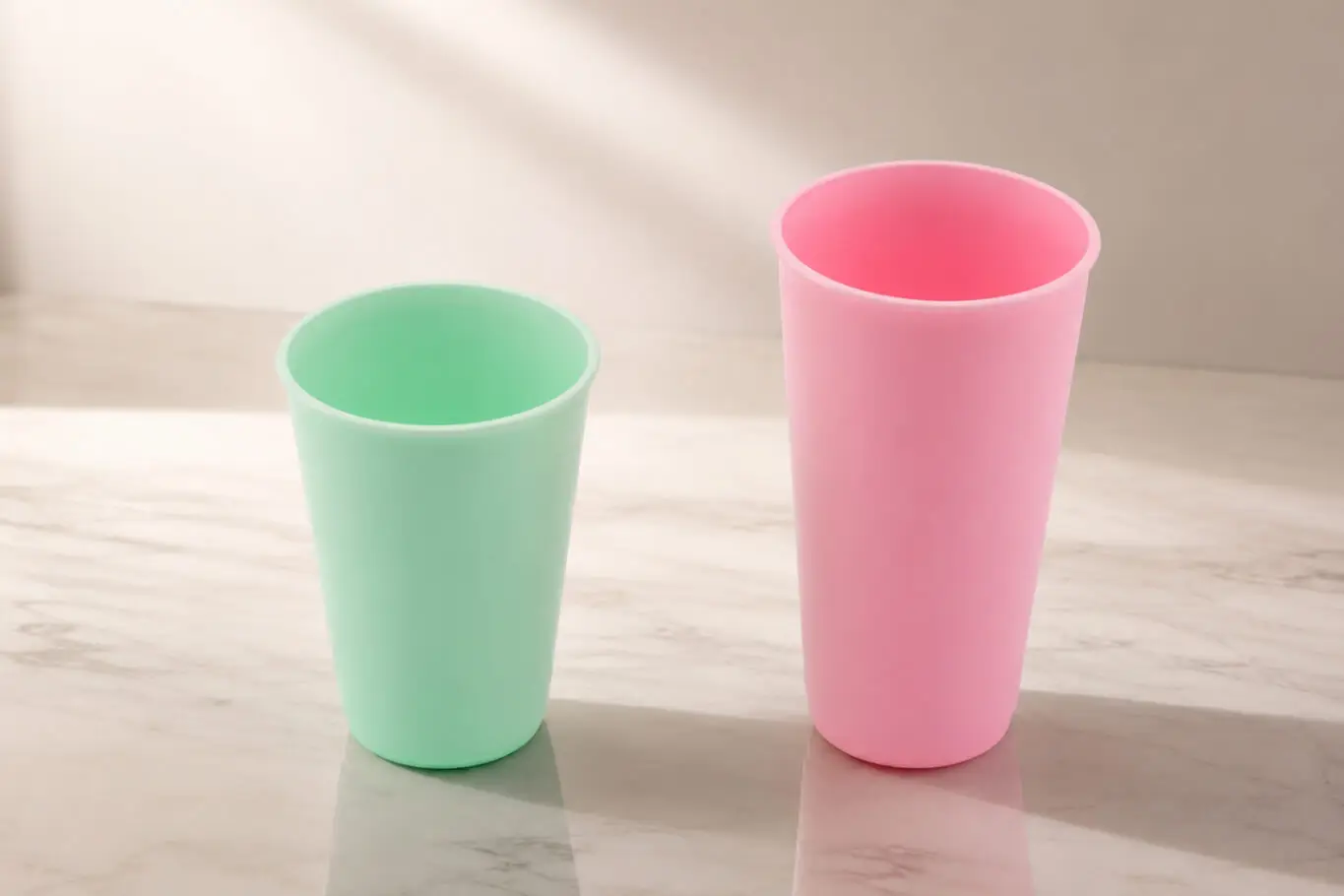
700ml Drink Cup, 37% Lighter
A foamed 2.1mm wall delivers the stiffness of a much heavier solid design at a finished weight of 43.3g instead of 69.7g, a 37.09% weight reduction. At an annual volume of 10 million pieces, that saves roughly 603 tons of CO2 per year. The foamed wall also insulates, slowing heat transfer through the cup.
Air Duct, Warp Eliminated
A large flat grille that warped as a solid molding came out flat after foaming, with shrinkage variation across the part reduced from 0.9mm to 0.3mm.
Automotive Floor Mat, Lighter with Rebound
Foaming reduced the mat's weight while adding compression rebound for a better underfoot feel.
Get Answers From Our Experts
Supercritical Foam FAQ
If your question is not listed here, please contact us and our team will be glad to assist you.
Common injection molding resins such as PP can be foamed, but foaming behavior depends on the material formulation, part geometry, and mold design together. Send us your part drawing and resin specification and we will assess feasibility before you commit to tooling.
Savings vary by geometry and wall thickness. On a 700ml drink cup we achieved a 37.09% reduction against the equivalent solid design, and thin-walled parts with uniform walls generally foam most efficiently. A feasibility review of your drawing gives you a realistic figure before tooling starts.
Rigidity is typically maintained or improved because the foamed wall can be made thicker than the solid design at a lower total weight. The solid outer skin carries surface loads while the microcellular core adds stiffness per gram.
Physical foaming adds no chemical blowing agents, so the material stays a single recyclable resin. Parts can carry a customized QR code for identification, which supports reuse programs and low-cost recycling at end of life.