
Injection Molding Capabilities
Injection Molding
Processes & Materials
Alongside standard thermoplastic injection molding, we can also provide over-molding for projects where you need a second material or a pre-placed metal insert overmolded in a single cycle.
We also provide supercritical foaming, a micro cellular process that injects a physical foaming agent into the polymer melt and yields parts with reduced weight, tighter dimensional stability, and built-in thermal insulation which is useful when your application has tight weight or thermal requirements.
We handle commodity resins (PP, PE, PS, ABS), engineering thermoplastics (PC, PA, POM, PBT, PCTG, PET, ASA), thermoplastic elastomers (TPE, TPR), and high-performance material grades (PEEK, PPS, PEI). We often process PC+ABS and PC+ASA blends, and glass-fiber-reinforced composites of these resins are available if your part requires added structural strength or thermal performance. We help you to match the material to your application and tool design at the program quoting stage.
OVER-MOLDING | INSERT MOLDING
TWO-MATERIAL & METAL-INSERT PARTS
SUPERCRITICAL FOAMING
LIGHTWEIGHT & THERMAL INSULATION
Production Capacity
Injection Molding Machine Capacity & Part Sizes
Our Taiwan facility operates 52 injection molding machines with clamping force from 30 to 3200 tons, producing finished parts from 1 gram to 25 kilograms in a single shot. The press fleet spans small-tonnage machines suited to thin-wall and precision components through large-tonnage machines used for structural automotive parts and home appliance housings. We run production 24 hours to support your delivery schedule and shorten program lead times.
Our second production base in Thailand adds 22 machines from 65 to 1300 tons if you need a dual-source manufacturing footprint or regional supply into ASEAN markets. Together, the two facilities support your program from prototype validation through high-volume serial production within a single supplier relationship.
Quality
Injection Molding Quality Control & Certification
We run production to the IATF 16949 quality framework for your automotive programs and the ISO 9001 framework for non-automotive industries. Every production run begins with first-article inspection against your approved part specification, we also apply statistical process control to automotive part runs and submit the corresponding documentation to you or your Tier supplier as part of the part approval process. Selected product lines also run automated CCD visual inspection at the press, catching surface and dimensional defects before parts reach secondary operations.
IATF 16949 quality framework
ISO 9001 framework for non-automotive
First article inspection
Photos
Injection Molding Gallery
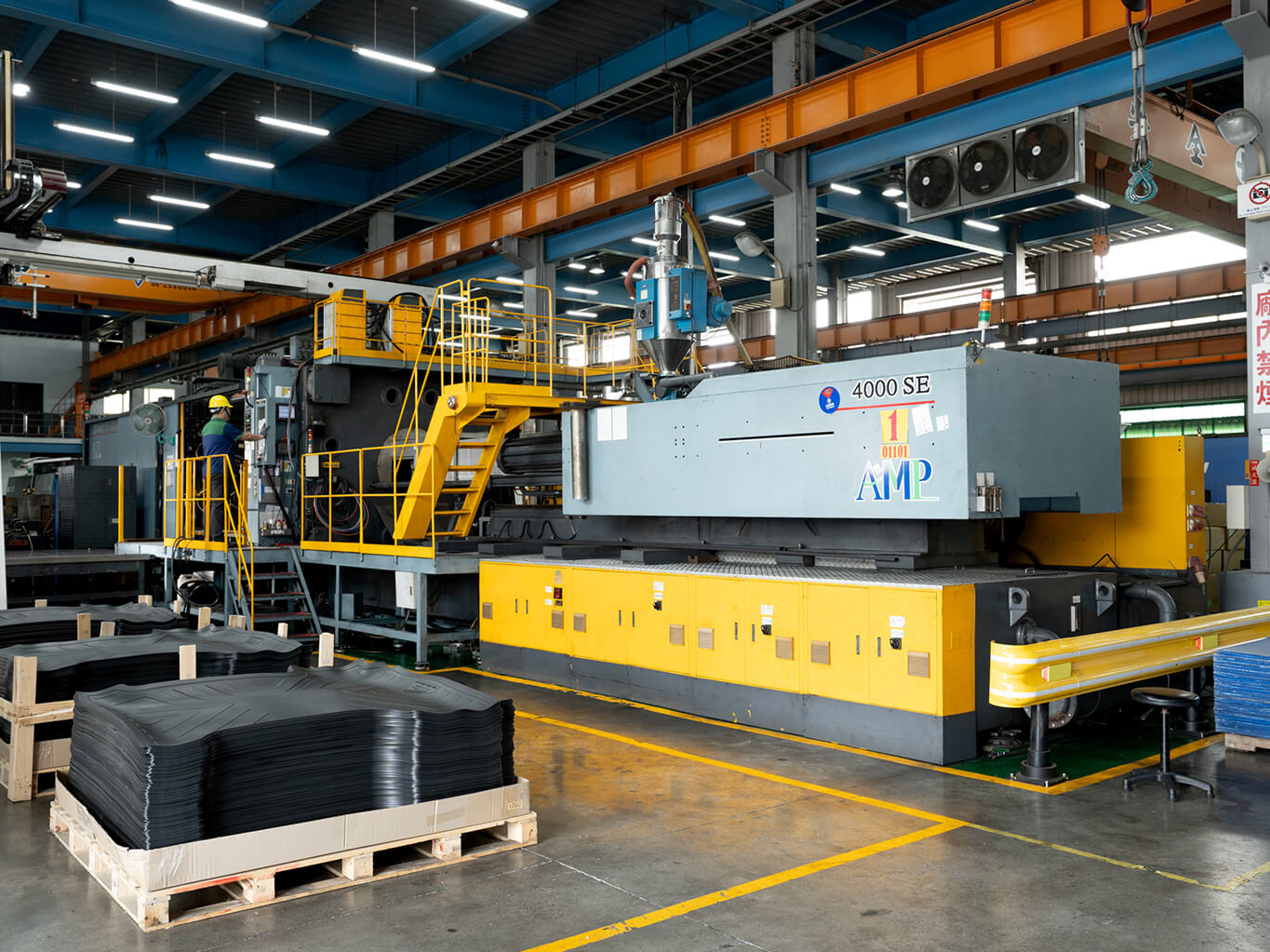
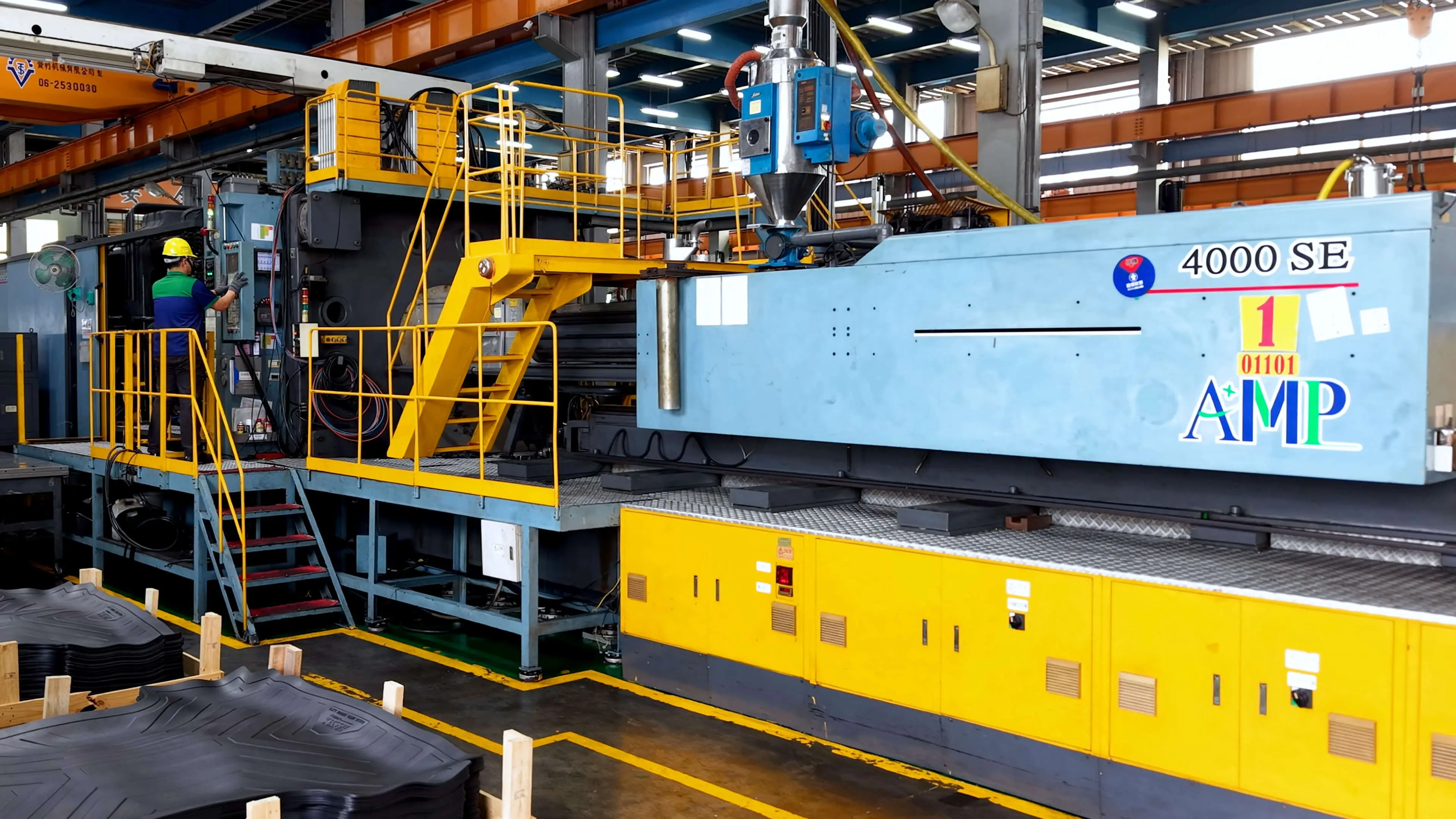
4000 SE press with finished parts AMP's 4000 SE large-tonnage injection molding machine with palletized automotive floor mats in the foreground, running 24-hour production
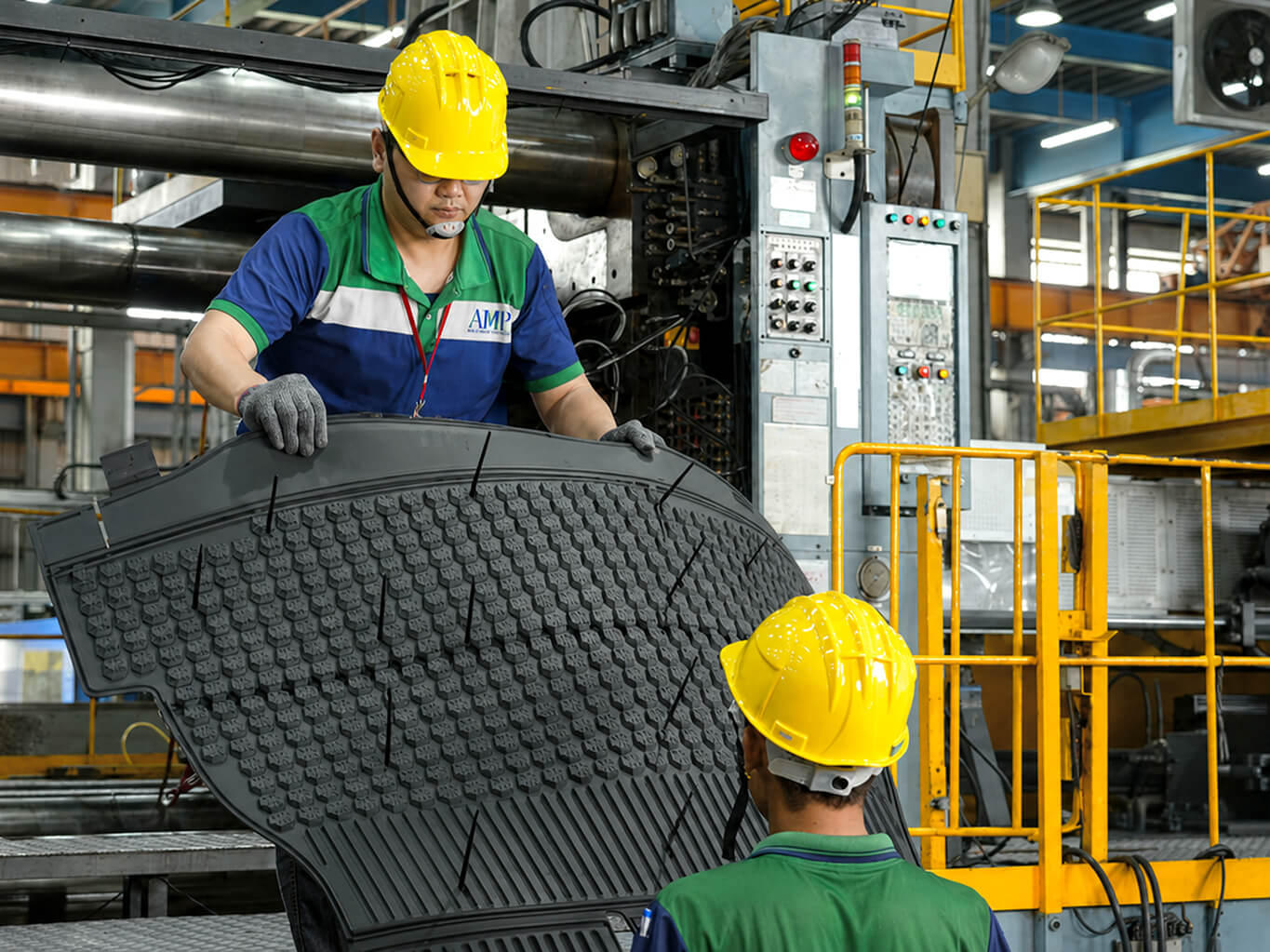
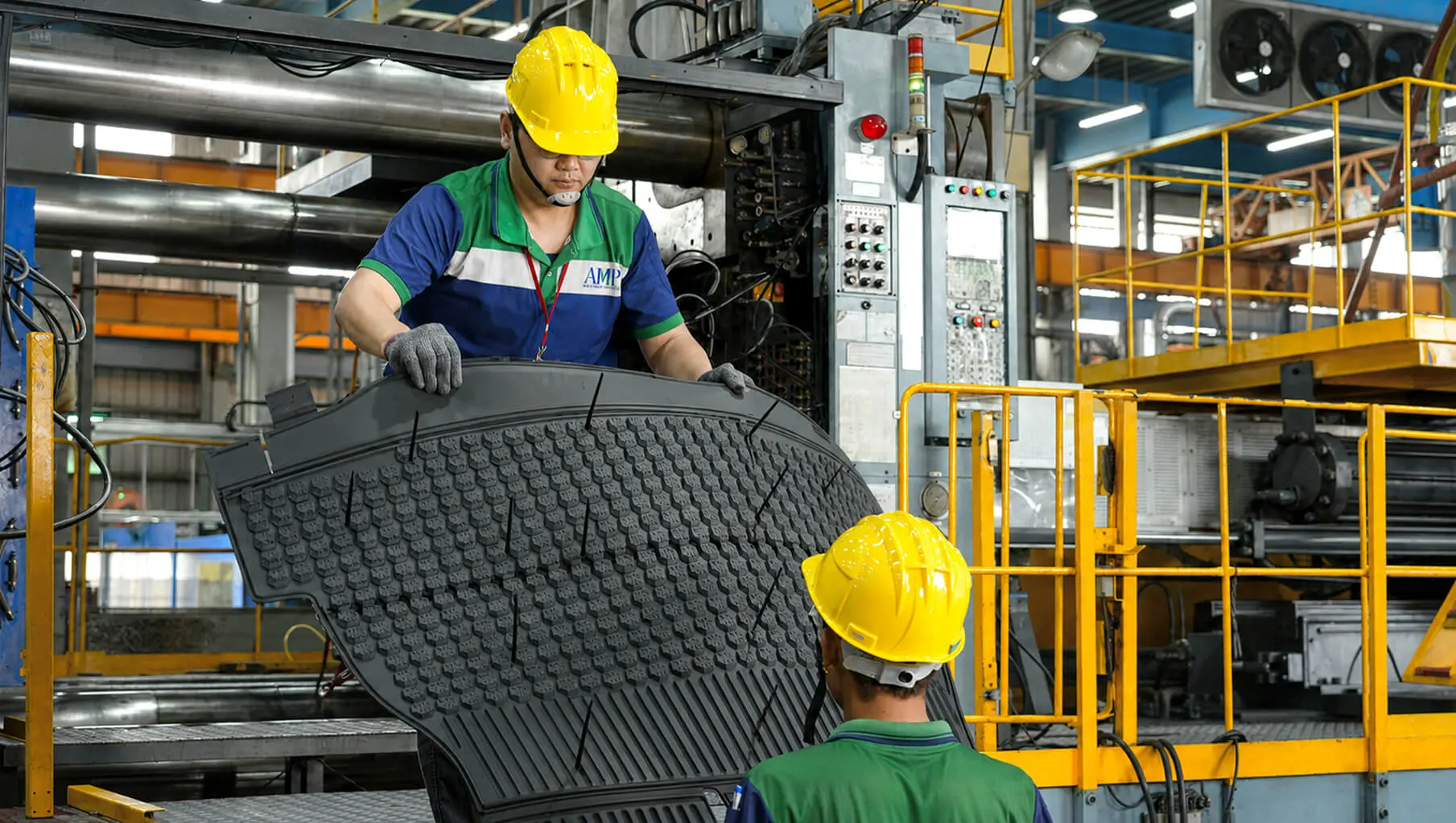
Automotive floor mat from the press AMP operators removing a large injection-molded automotive floor mat directly from the press, showing the textured surface detail produced in a single shot
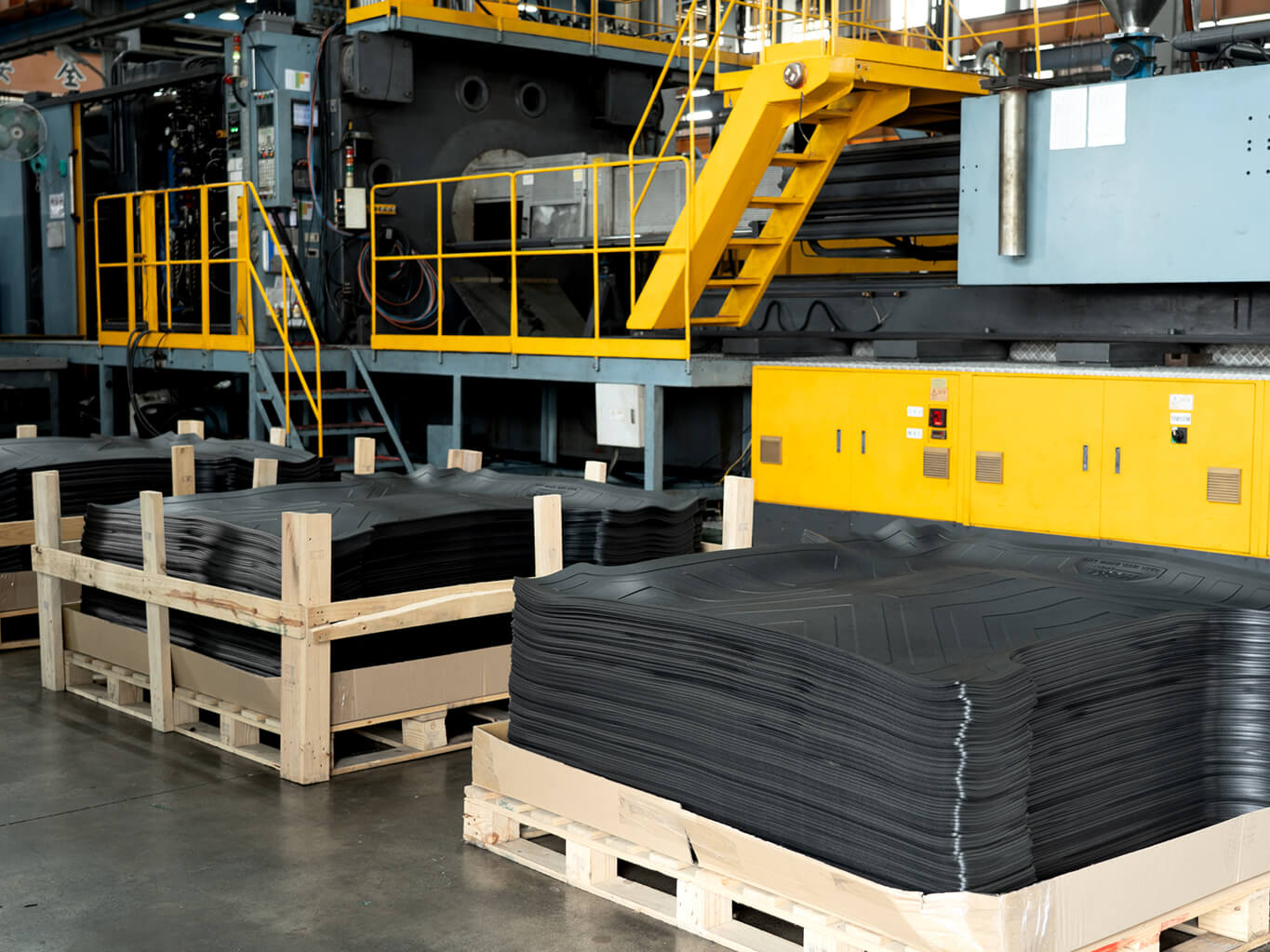
High-volume floor mat production AMP palletized automotive floor mats stacked beside our large-tonnage press, produced in high-volume serial runs on 24-hour production schedules
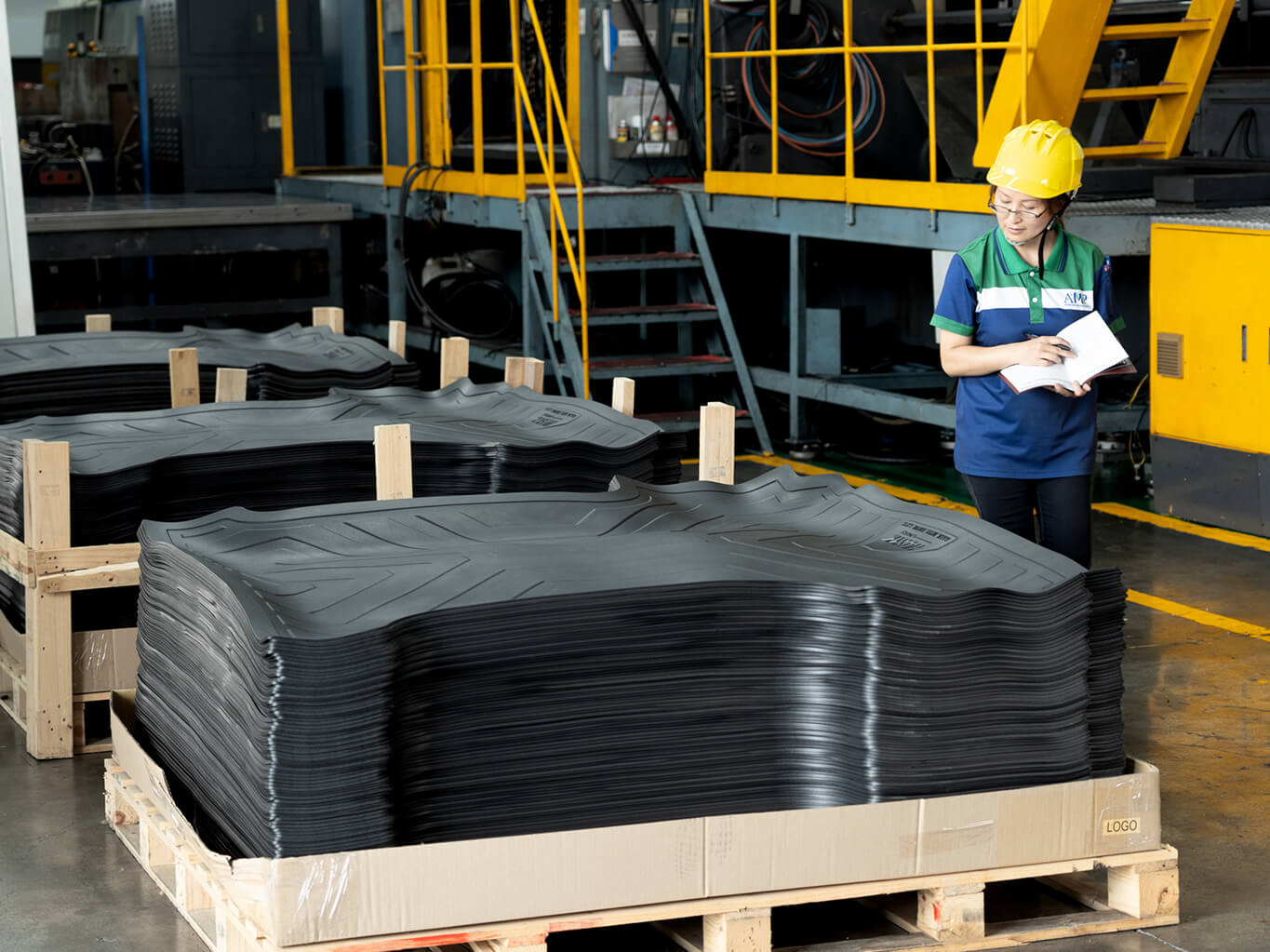
Production inspection and staging AMP quality team member reviewing production records alongside palletized injection-molded automotive floor mats staged for shipment
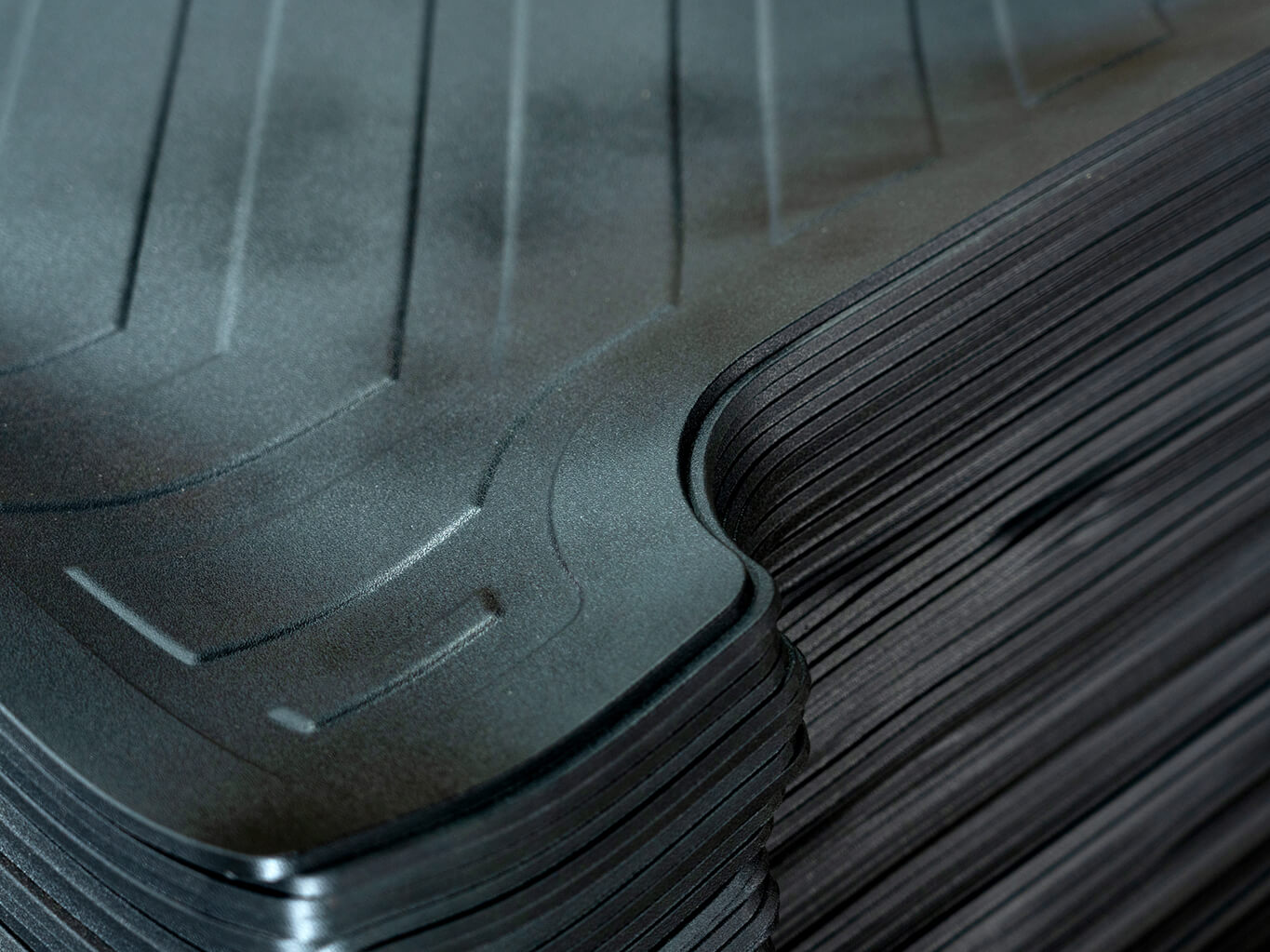
Floor mat edge and surface detail AMP injection-molded automotive floor mats showing consistent edge definition, raised lip profile, and surface texture across stacked production parts
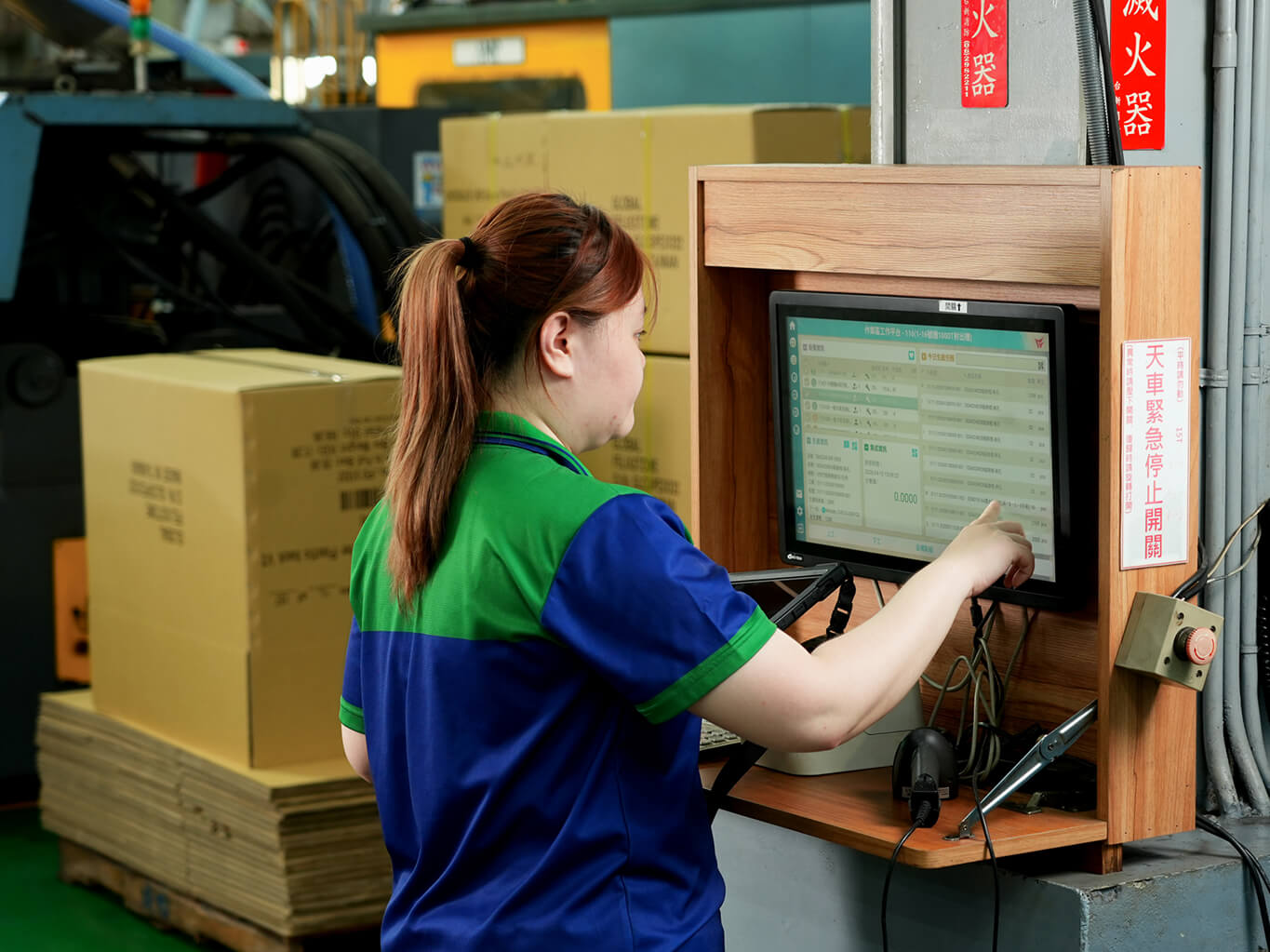
Production monitoring AMP operator tracking injection molding production data on our factory floor system, supporting process control and scheduling across 24-hour operations
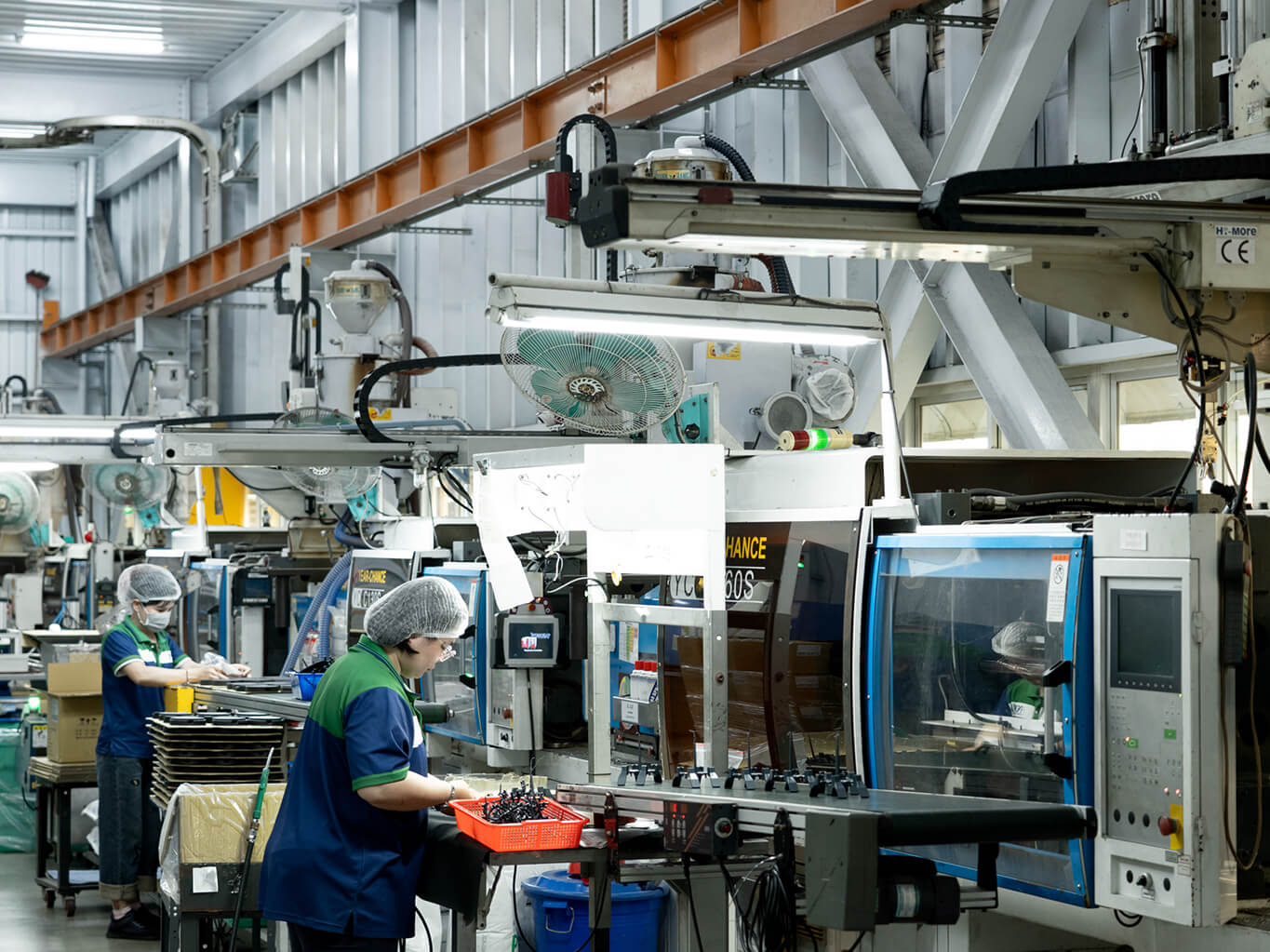
Small-tonnage production line AMP operators running small-tonnage injection molding machines with robotic part extraction, producing precision components for OEM programs
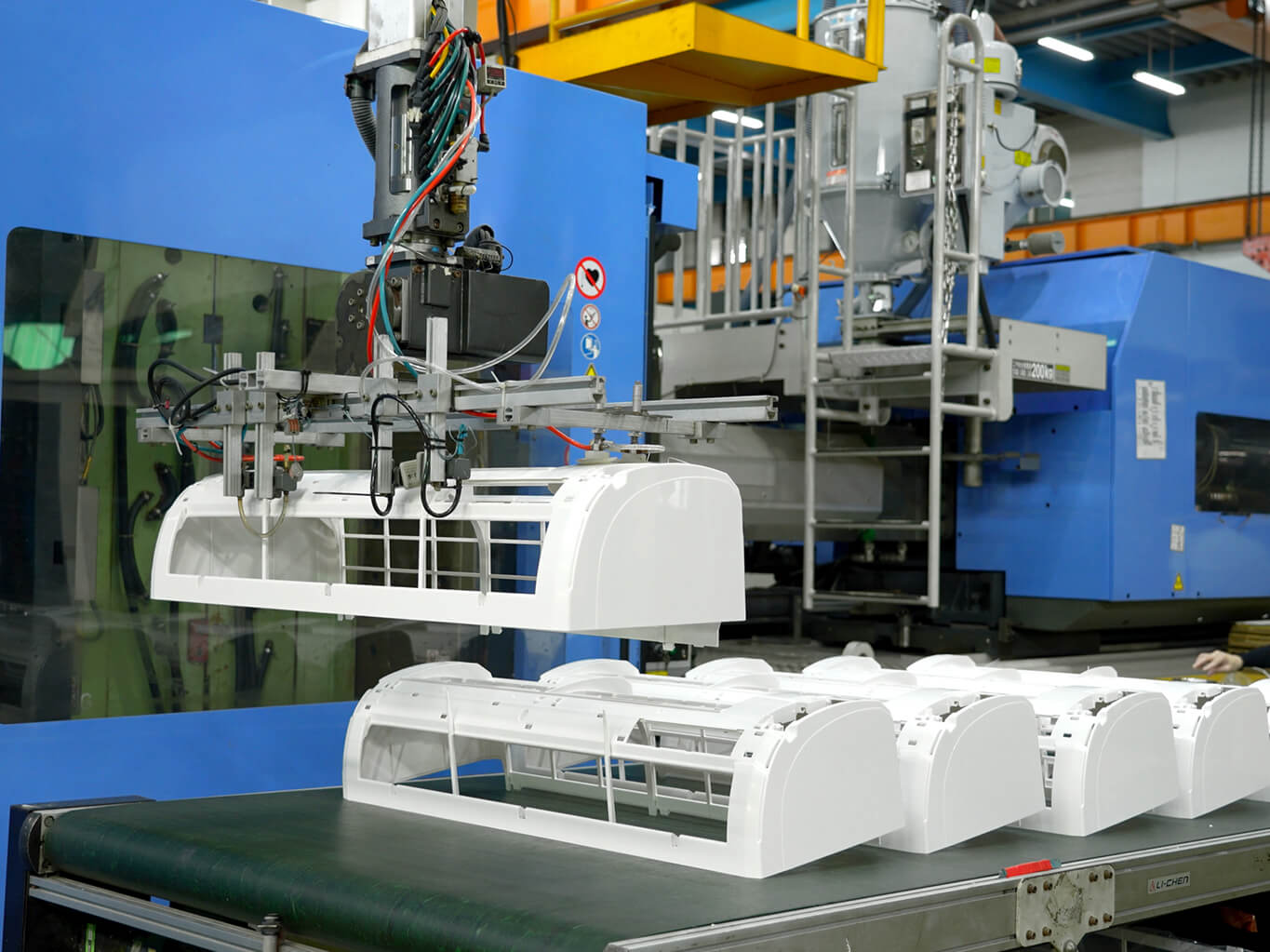
Robotic part extraction AMP robotic arm extracting an appliance housing from the injection molding machine, with finished parts staged on the conveyor for secondary operations
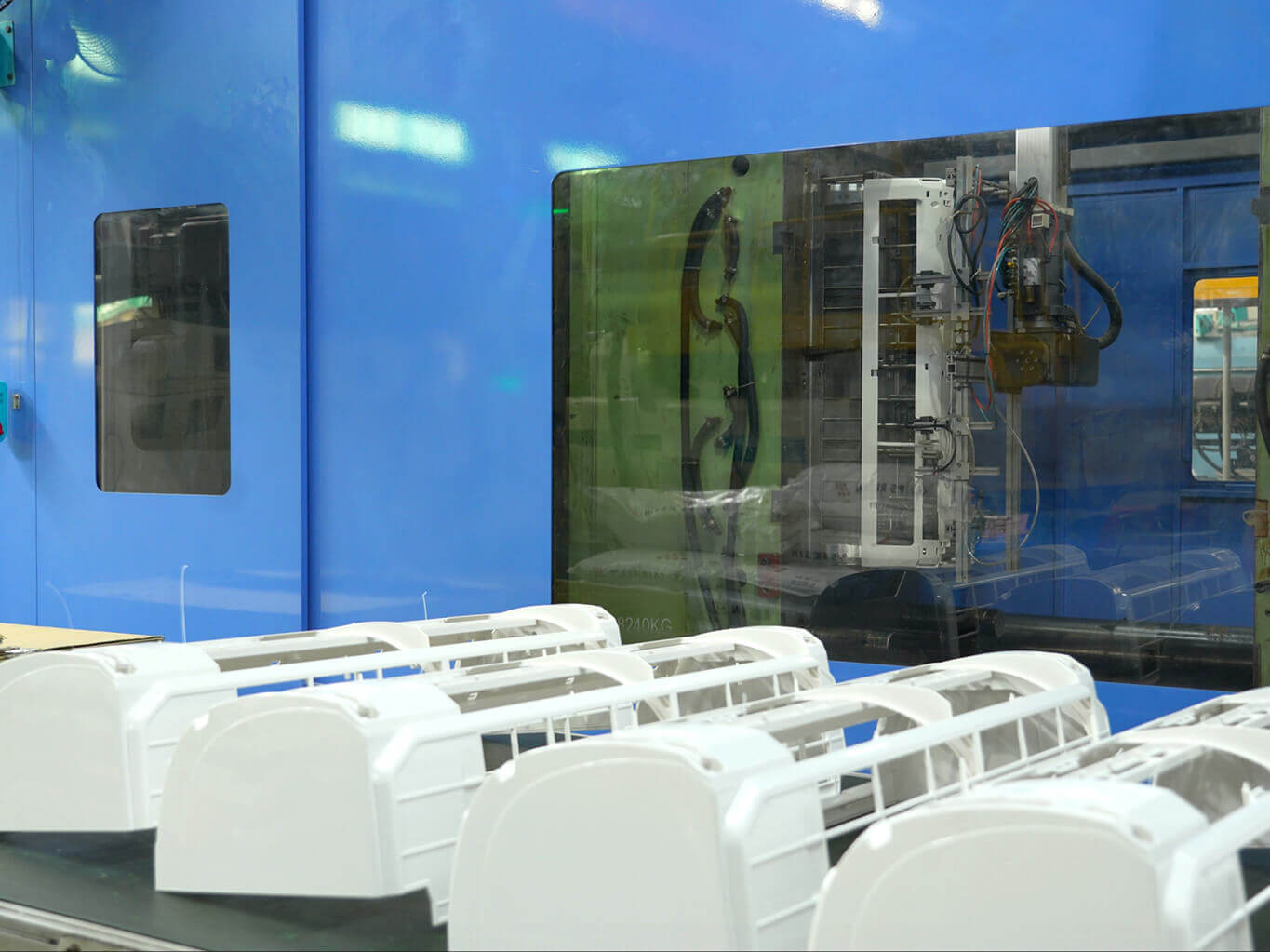
Appliance housing production AMP injection-molded appliance housings staged beside the press, with the mold and robotic extraction system visible through the safety guard
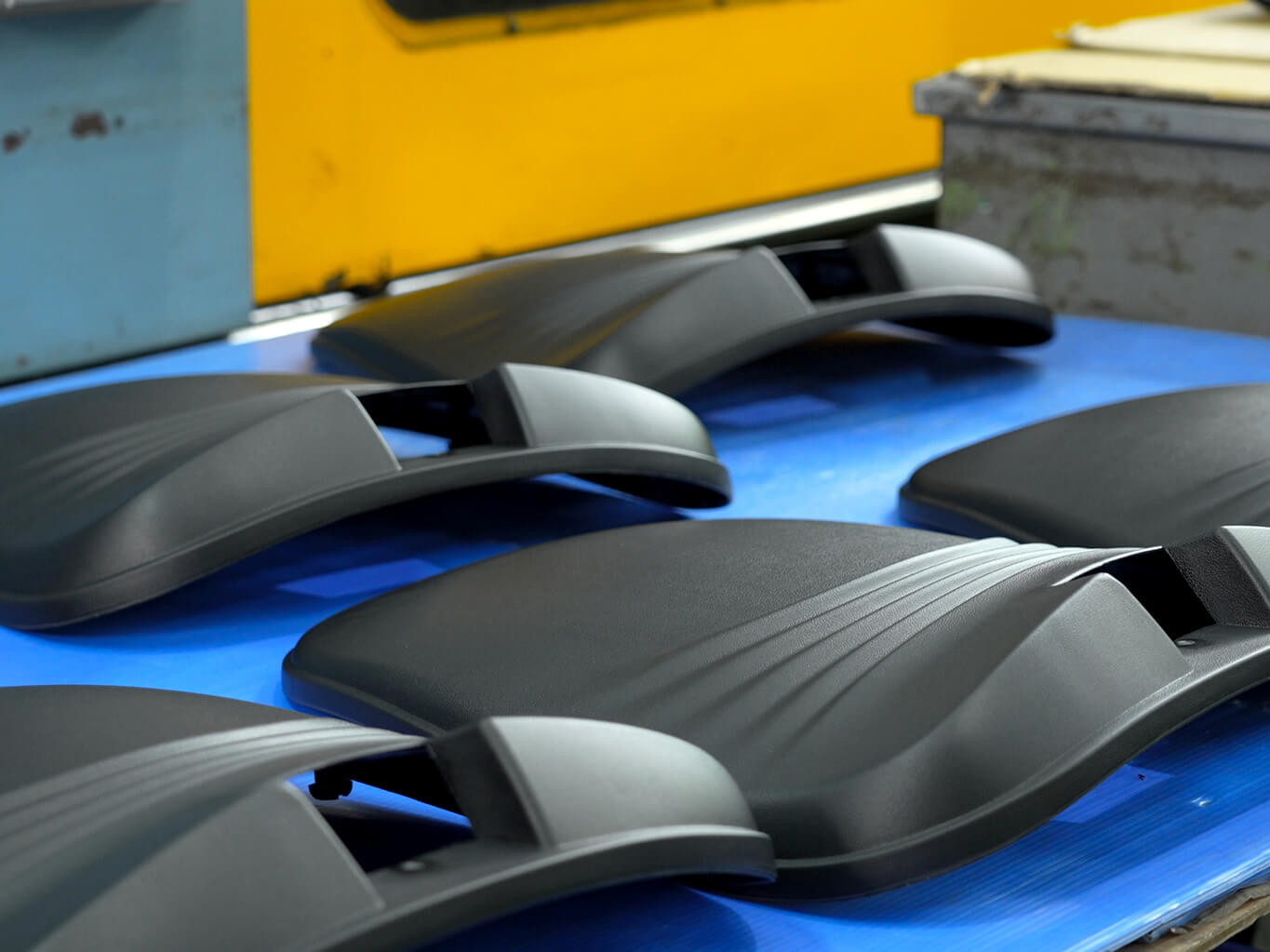
Seat outer panels AMP injection-molded seat outer panels with textured matte finish, staged for inspection after production on our press fleet
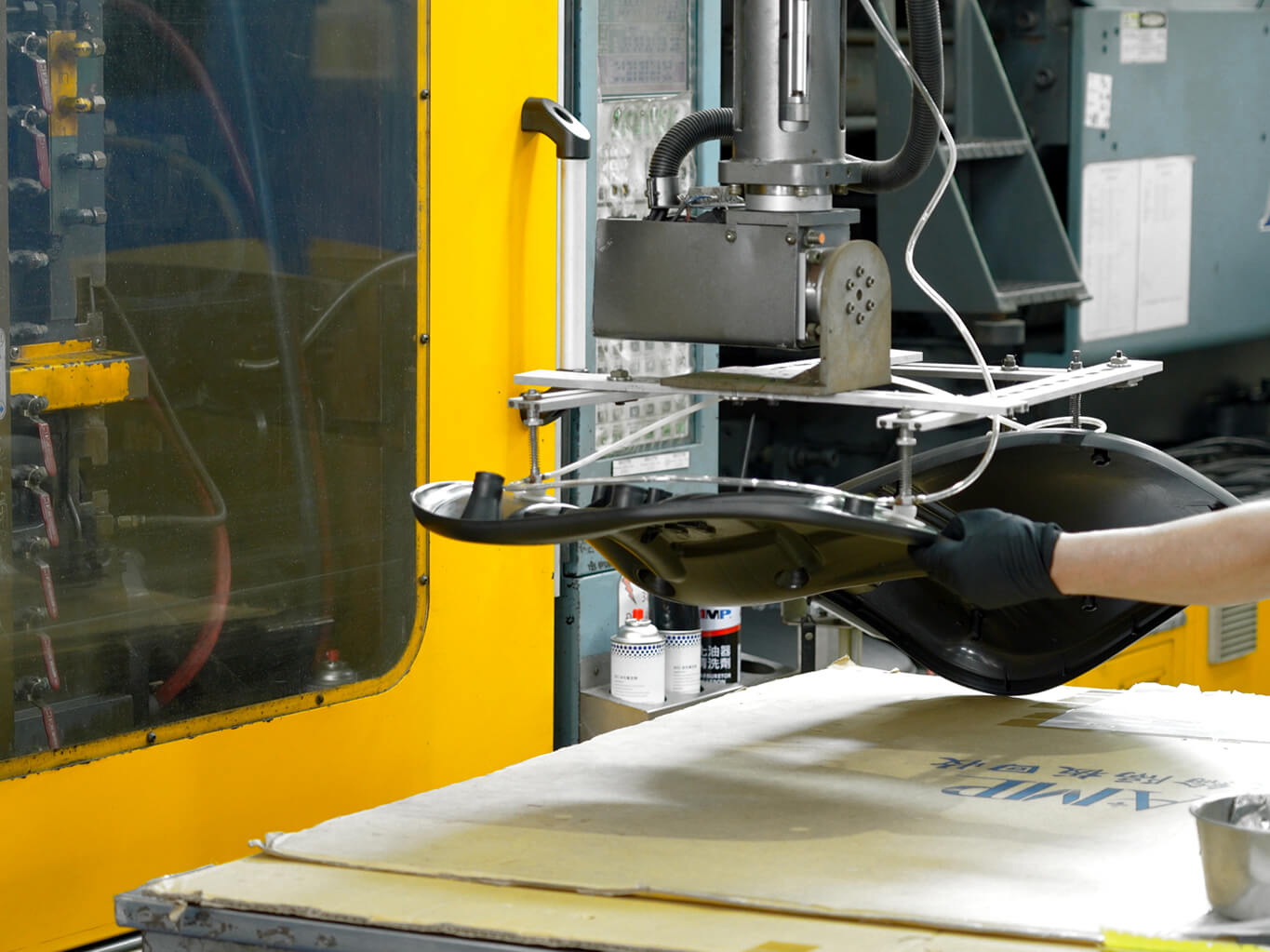
Seat panel extraction AMP robotic extraction removing a molded seat panel from the injection molding press, with operator guiding the part to staging
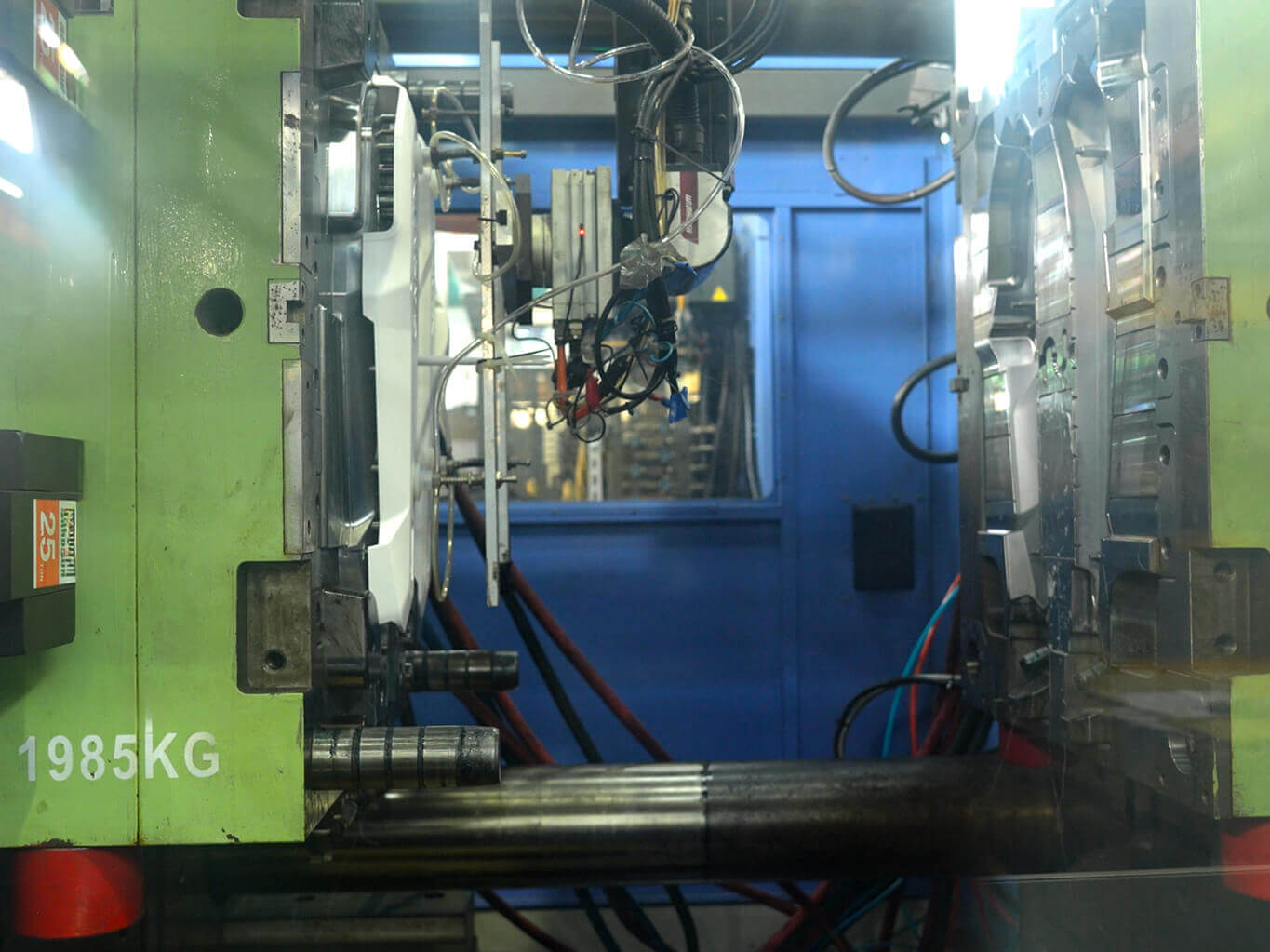
Mold installed in press AMP injection molding machine with a 1,985 kg mold installed and open between the platens, showing cavity and core sides with cooling and hydraulic connections
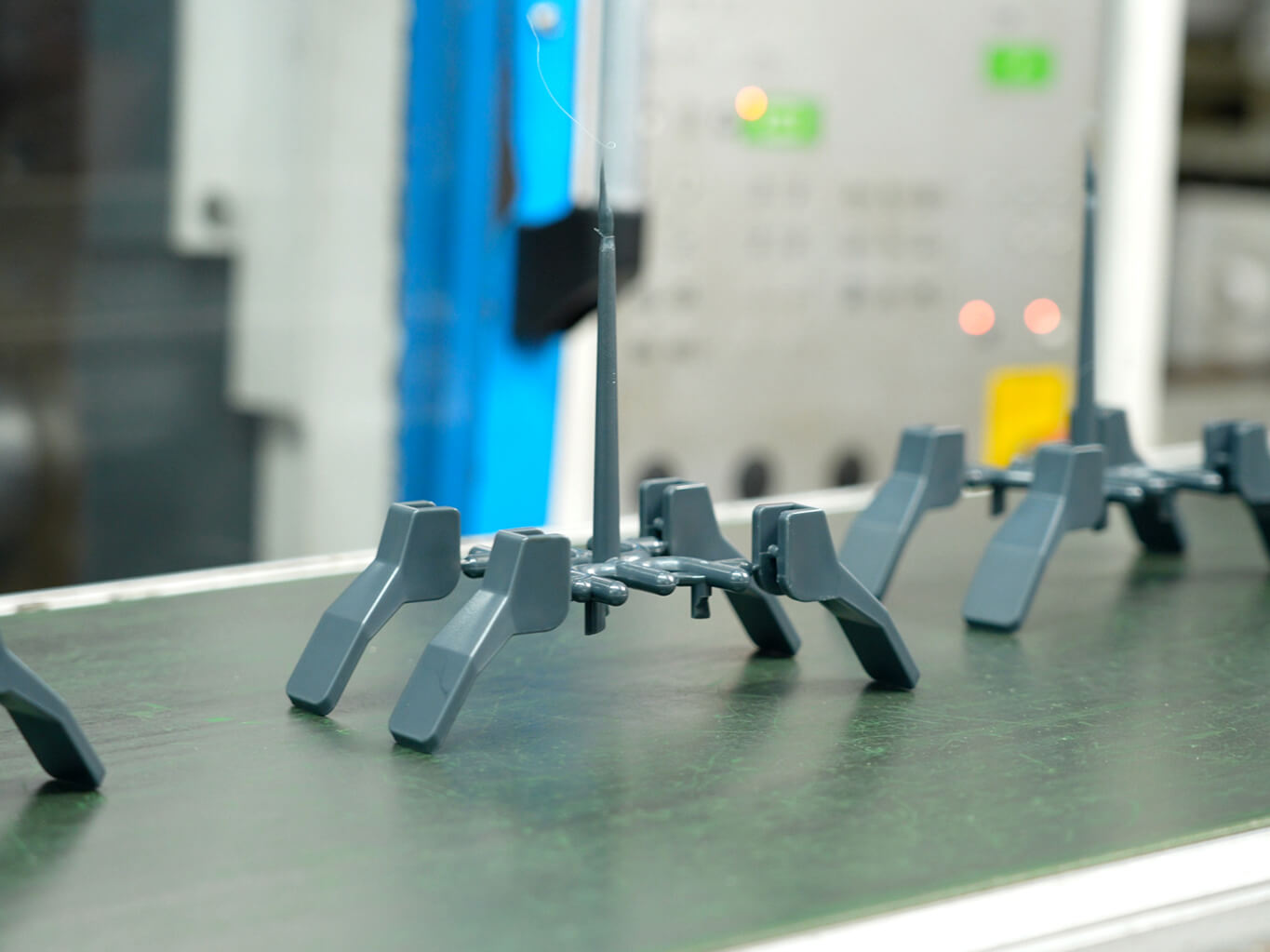
Multi-cavity molded parts on runner AMP injection-molded precision components still attached to the runner system after ejection from a multi-cavity mold, ready for degating
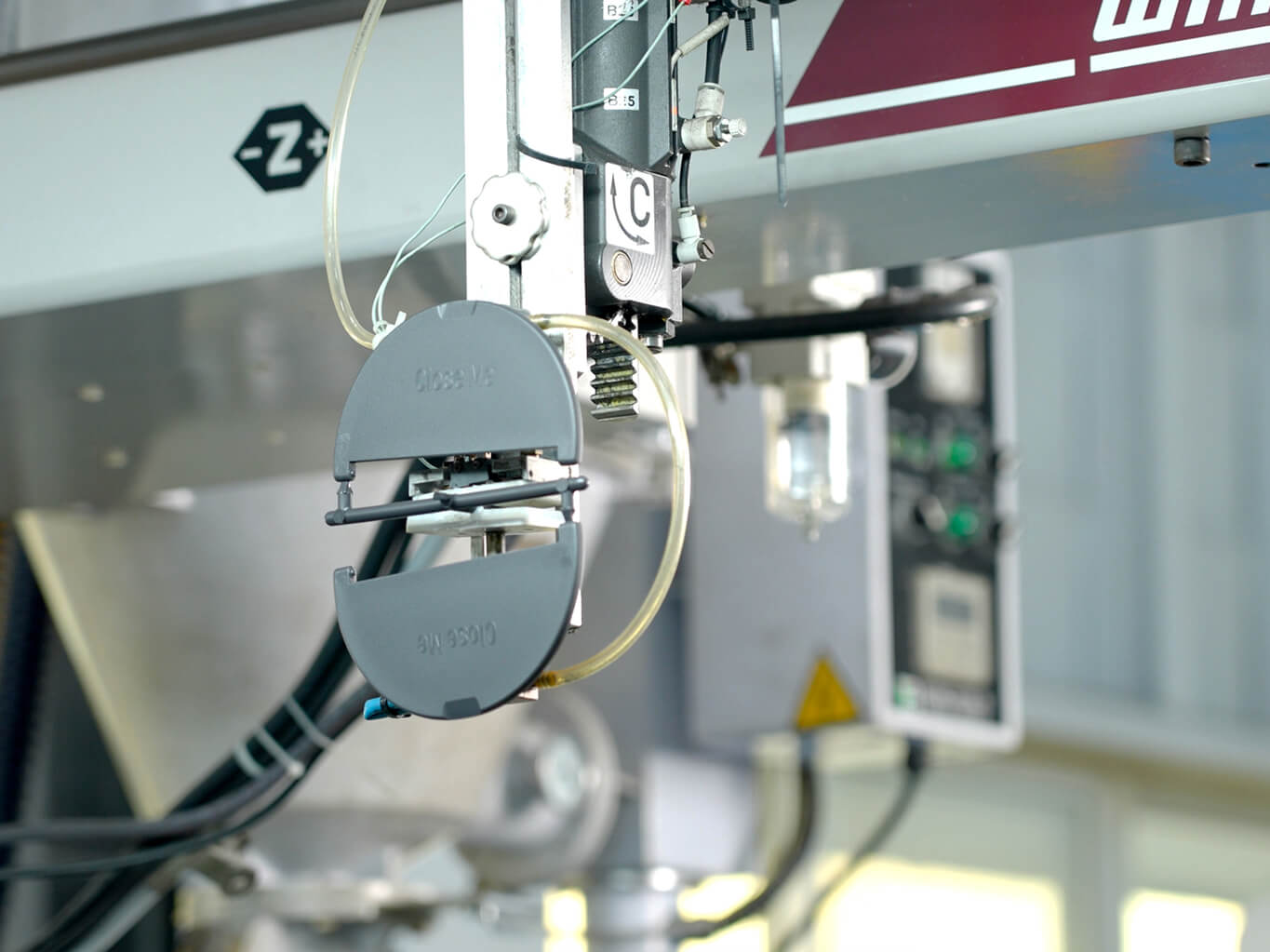
Robotic part pick-up AMP robotic end-of-arm tooling gripping a freshly molded component using vacuum suction for automated extraction from the injection molding press
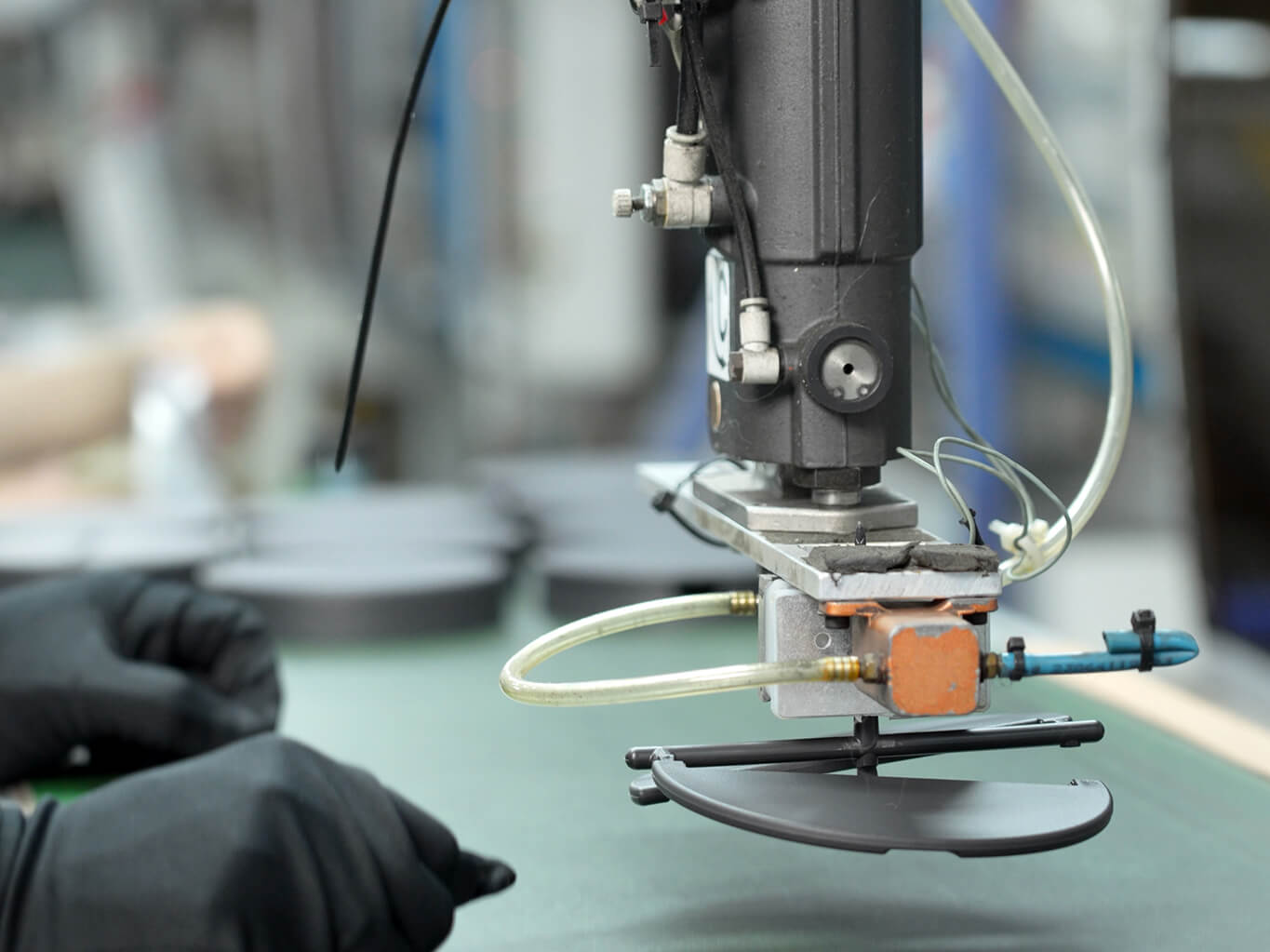
Robotic part placement AMP robotic arm placing injection-molded components onto the conveyor after automated extraction from the press
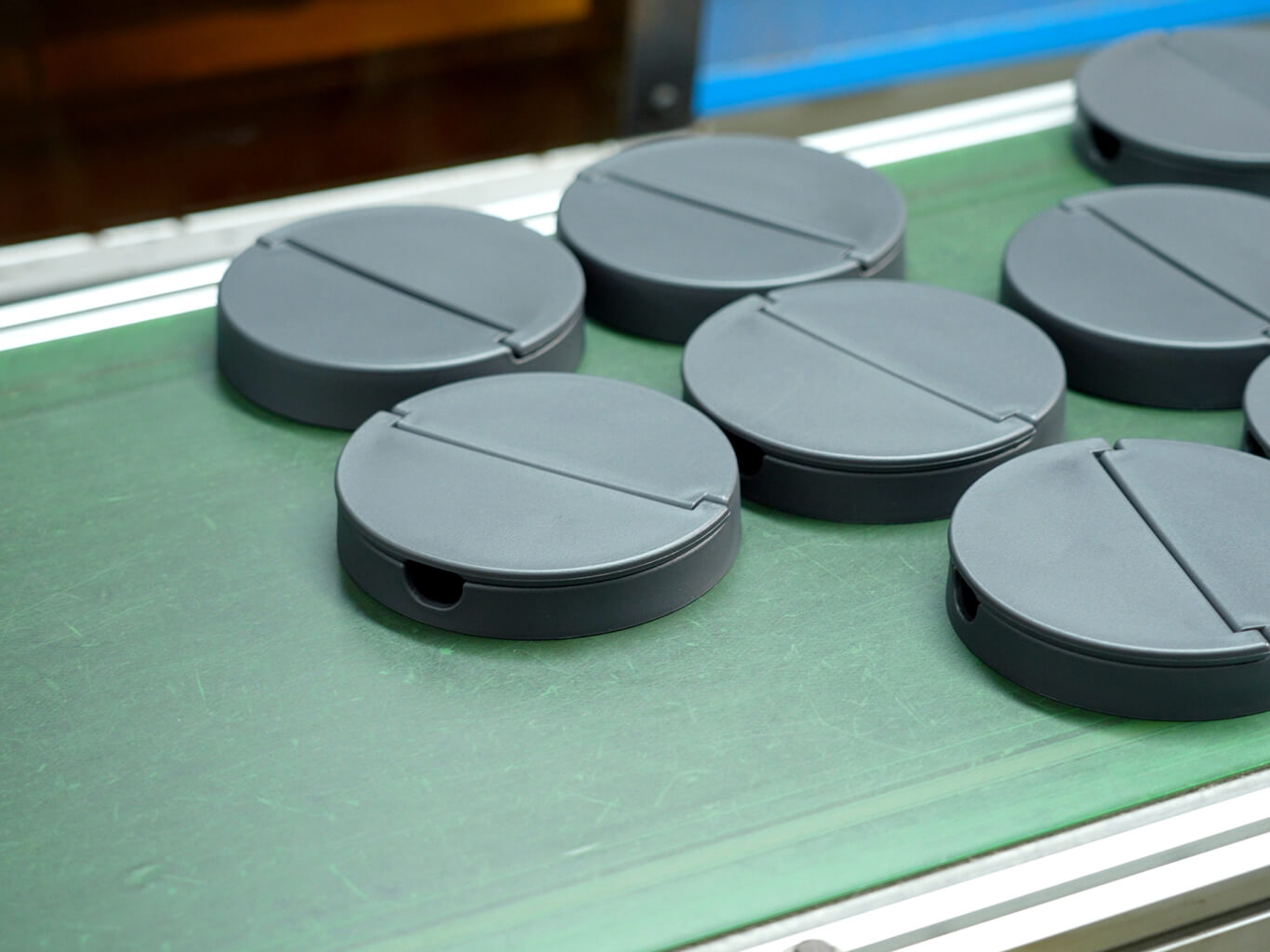
Molded components on conveyor AMP injection-molded precision components with consistent surface finish on the production conveyor, ready for inspection and packaging
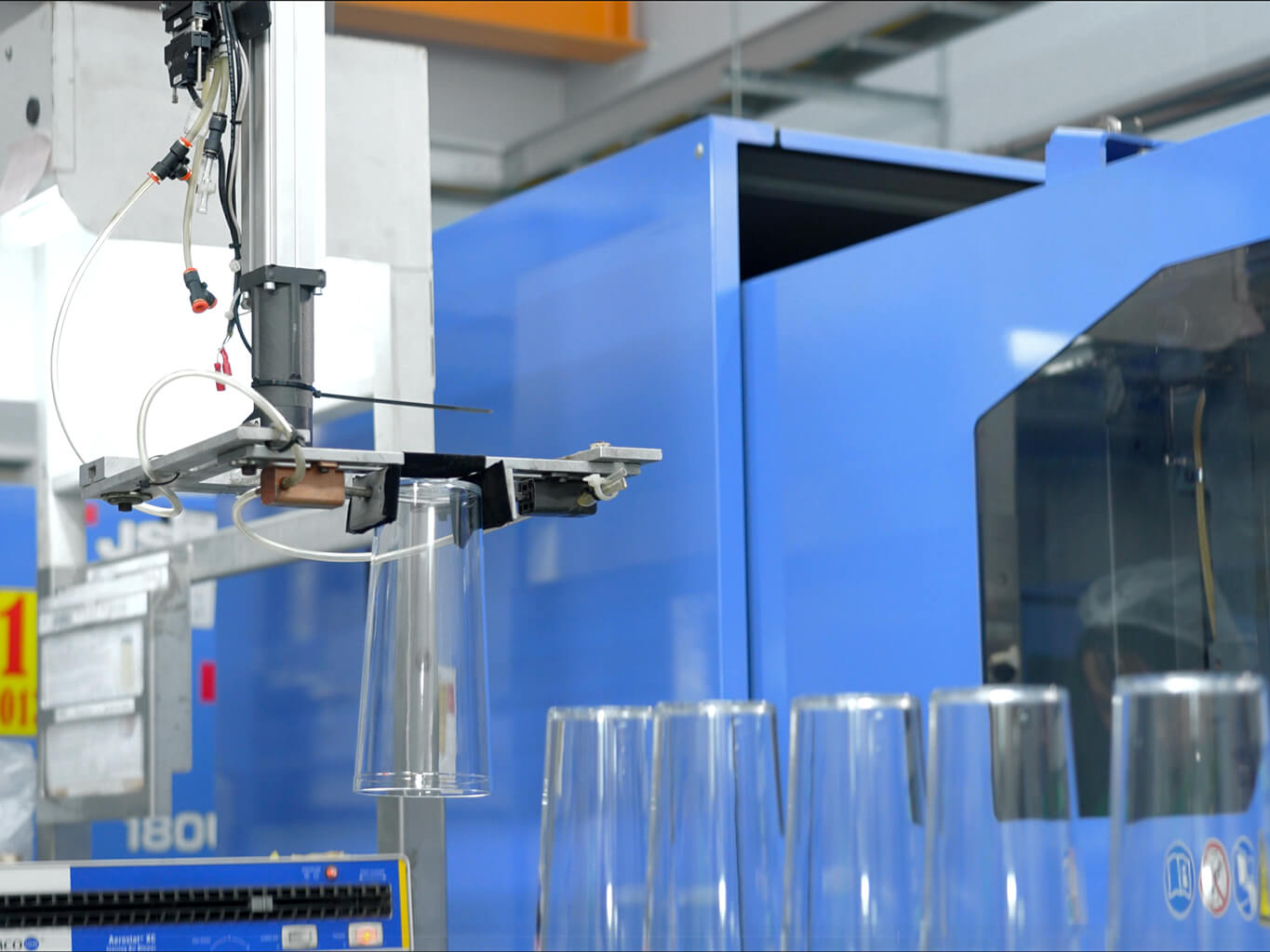
Transparent component molding AMP robotic extraction placing clear injection-molded components from a JSW press, produced in optically transparent material for consumer or food and beverage applications
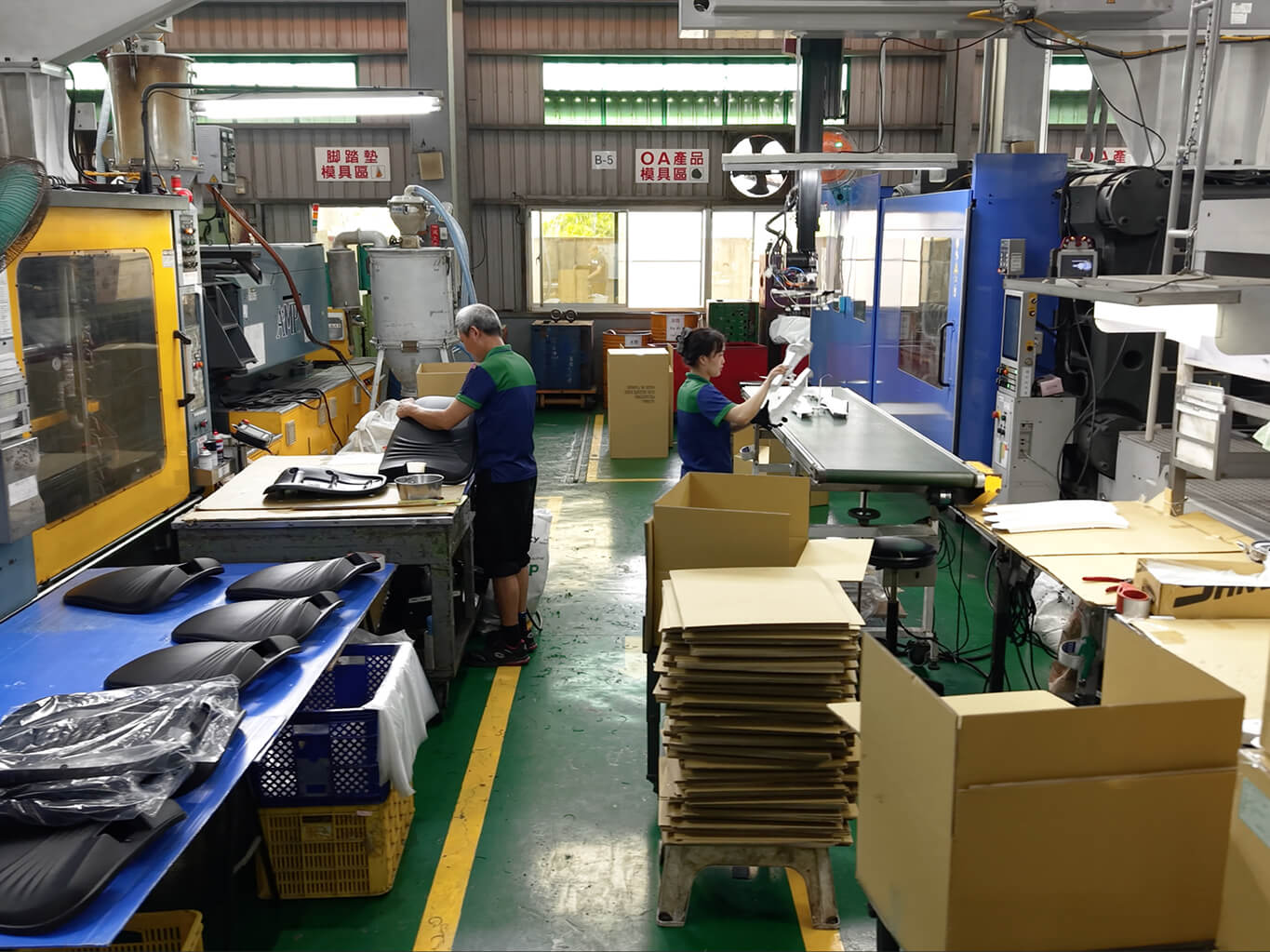
Secondary operations and packaging AMP operators performing inspection, trimming, and packaging of injection-molded components at press-side workstations for direct shipment
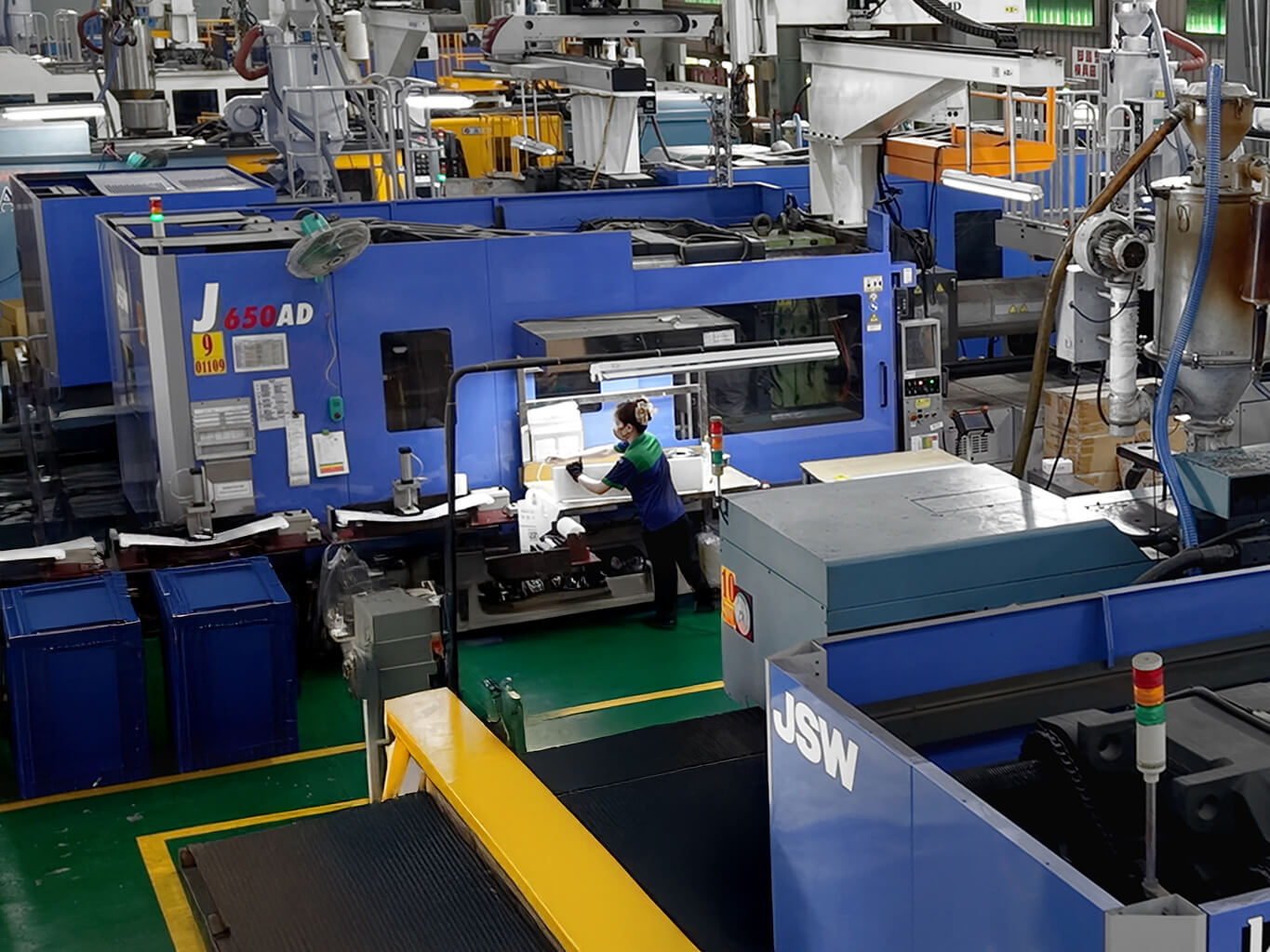
JSW electric press fleet AMP's production floor with JSW electric injection molding machines including J650AD and J450ADS models, delivering tighter shot-to-shot repeatability for OEM programs
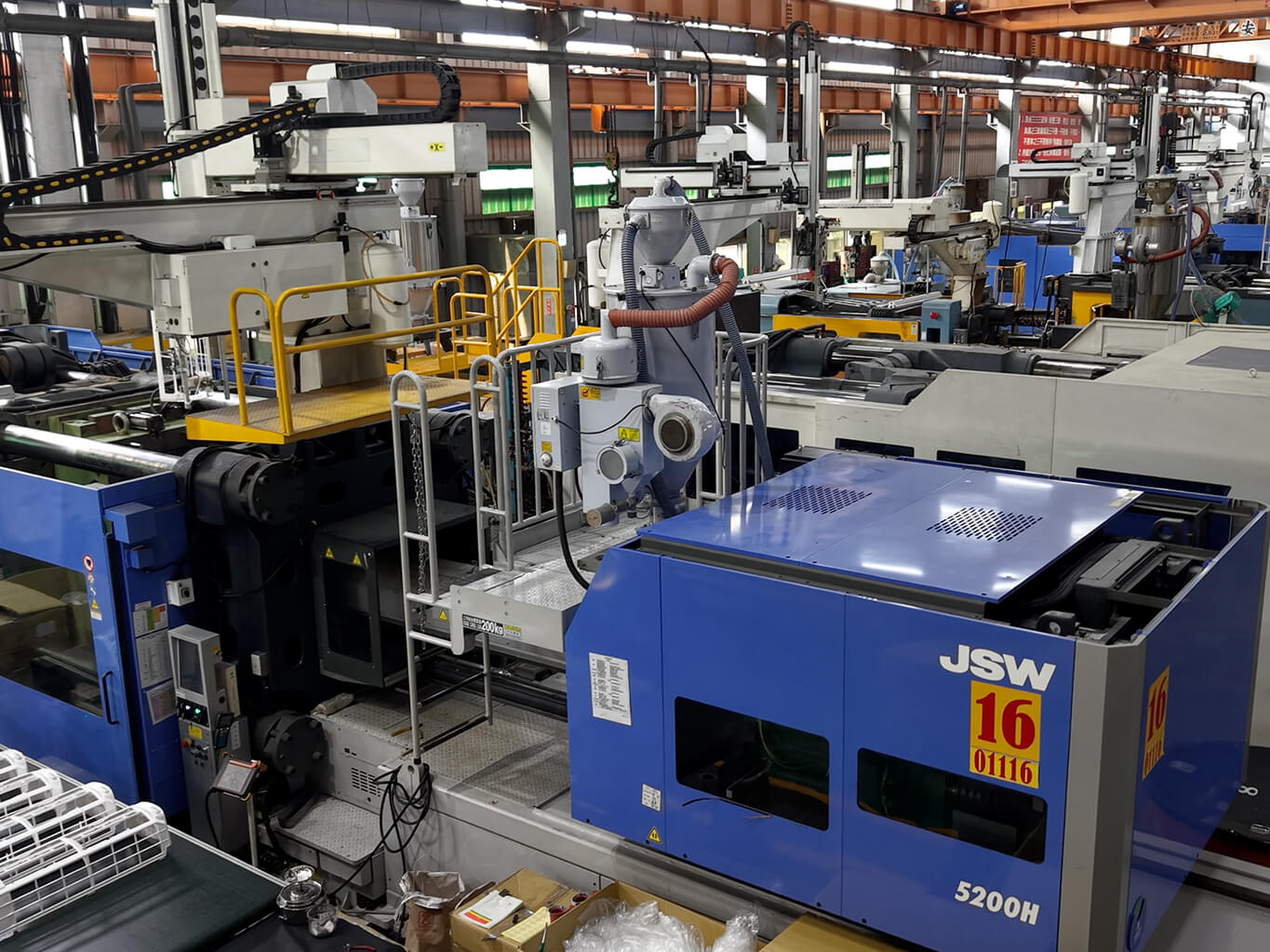
Production floor overview AMP's injection molding production floor with JSW 5200H and multiple mid-to-large tonnage presses equipped with robotic extraction, part of our 52-machine fleet
Get Answers From Our Experts
Injection Molding FAQ
If your question is not listed here, please contact us and our team will be glad to assist you.
Over-molding is the right choice when your part requires two materials bonded in a single cycle, such as a rigid substrate with a soft-touch grip, or when a metal insert (threaded bushing, terminal, fastener) needs to be encapsulated in plastic without a secondary assembly step. It reduces part count, eliminates adhesive or mechanical joining, and improves dimensional consistency between the two materials.
For buyers, the decision typically comes down to whether the assembly step you would otherwise run downstream is adding labor cost, introducing alignment variation, or creating a quality inspection burden. If any of those apply, over-molding usually pays back across the program lifetime.
Supercritical foaming suits parts where weight reduction, dimensional stability, or thermal insulation matter to the application. The microcellular structure produced by the process reduces part weight by approximately 8 to 15 percent depending on geometry and resin, while also reducing sink marks, warpage, and internal stress in thick-walled sections.
Typical applications include automotive interior trim where weight contributes to fuel economy or EV range, food and beverage containers requiring thermal insulation, and home appliance housings where dimensional stability across temperature cycles matters. We assess suitability against your part geometry and resin selection at the quoting stage.
Achievable tolerance depends on the resin shrinkage characteristics, part geometry, wall thickness, and tooling design rather than a single facility-wide specification. Unfilled commodity resins (PP, PE) shrink more and hold looser tolerance than filled engineering grades (PA-GF, PC-GF), which shrink less predictably and allow tighter dimensional control.
For your specific part, we assess tolerance feasibility against the resin specification, mold layout, and inspection method at the DFM review stage. Tighter tolerance bands are typically achievable by adjusting gate placement, cooling design, and cavity pressure control rather than by inspecting more parts after the fact.
Glass fiber-reinforced compounds (PA-GF, PBT-GF, PC-GF, PPS-GF) and high-temperature resins (PEEK, PPS, PEI) are processed routinely on machines configured with hardened screws and barrels to manage abrasive wear. Drying protocols, melt temperature windows, and screw speed parameters are managed per resin specification rather than applied generically across the fleet.
These materials are common in your automotive underhood, electronics structural, and HVAC component applications, where temperature resistance, dimensional stability, and mechanical strength are critical. Material selection support is available at the program quoting stage if you are evaluating alternative resins for cost, performance, or supply availability.
Yes. DFM review is included in every program before tooling is cut. Our engineering team reviews your part design for wall thickness uniformity, draft angle adequacy, gate location, ejection strategy, parting line placement, and resin shrinkage compensation. Issues identified at this stage are inexpensive to resolve; the same issues found after tooling is cut are expensive.
The DFM output is a marked-up part review with recommended changes, supported by mold flow analysis where the geometry warrants it. You retain final design authority. The intent is to surface problems before they reach the press, not to redesign your part.
Continuous 24-hour operation shortens program lead times and improves machine utilization, which keeps your unit cost competitive on longer production runs. It also means scheduled tooling, color changes, and maintenance windows are absorbed without extending your delivery date.
For OEM buyers running multi-program supply contracts, 24-hour capability means our scheduling team can sequence your runs against other programs without forcing trade-offs between delivery commitments. It is also the operational baseline that supports the IATF 16949 capacity planning requirements your automotive procurement team will audit against.
Our press fleet is progressively transitioning to electric injection machines, which deliver tighter shot-to-shot repeatability, lower energy consumption, and cleaner operation than hydraulic equivalents. Electric presses are typically assigned to programs where dimensional precision, surface finish, or process stability is critical, including most automotive and electronics components.
Hydraulic machines remain in service for large-tonnage structural parts where the shot size, clamping requirements, or tooling configuration favors hydraulic clamping. The selection is made program by program based on part requirements rather than by buyer or industry category.
Yes. Mold transfer programs are supported, including incoming mold inspection, sample run validation, and first-article approval against your existing part specification. We assess each transferred mold for steel condition, cavity wear, cooling layout, and venting before committing to a production schedule.
Where transferred tooling needs refurbishment, repair work is performed in-house at our Taiwan facility under the same quality system as new mold development. This means a single point of accountability across the transfer, refurbishment, and production phases, without coordinating between separate tooling and molding suppliers.
For IATF 16949 automotive programs, we provide the documentation set required for your part approval process, including first-article inspection reports, dimensional measurement results, material certifications, process capability data (Cpk), and statistical process control records. The documentation format is aligned with the requirements of your Tier 1 customer or OEM specification.
For programs requiring full PPAP (Production Part Approval Process) submissions or equivalent, we work to the specific level and scope your procurement team requires. Documentation is provided as part of the production handover, not as a separate billable deliverable.
Automated CCD visual inspection runs at the press on selected lines, catching surface defects (sink marks, flow lines, contamination, short shots) and dimensional anomalies before parts reach secondary operations. This shifts defect detection upstream, reducing the cost of inspecting or reworking parts after assembly, finishing, or packaging.
CCD inspection is most useful on programs with high cosmetic standards, tight cycle times, or downstream operations where defects compound (paint, plating, assembly). It is assigned program by program based on the part specification and your quality requirements rather than applied uniformly across the fleet.