
Cavity
Last updated
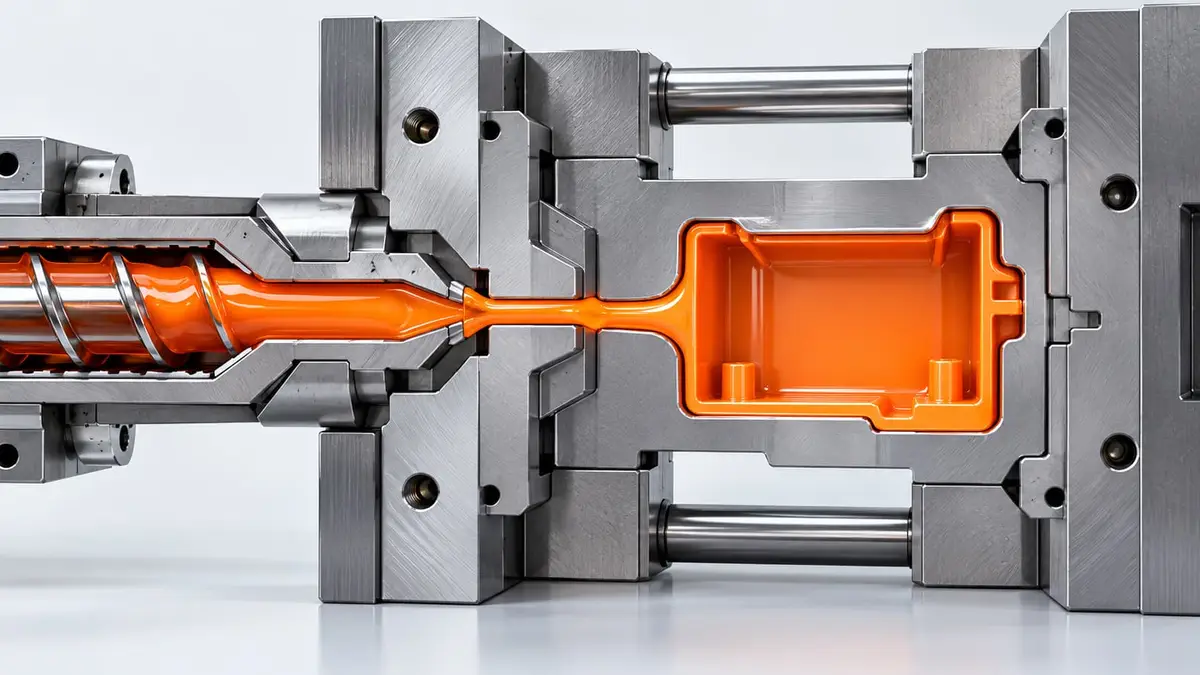
Definition of Cavity
A cavity is the hollow impression in an injection mold that defines the external geometry of a molded part. Most production molds contain one or more cavities so a single shot can produce multiple identical parts per cycle.
Cavity design accounts for draft angles, wall thickness, ribs, bosses, and gate placement so plastic fills evenly and releases cleanly when the mold opens. Core and cavity sides work together: the cavity forms outer surfaces while the core forms internal features.
Why It Matters for Plastic Injection Molding
Uniform cavity geometry across all impressions helps AMP hold dimensional tolerance on multi-cavity tools. Balanced fill and cooling reduce short shots, sink marks, and variation between cavities on high-volume programs.
Adding cavities increases output per cycle but raises tooling complexity and maintenance. Mold designers weigh cavity count against projected volume, machine tonnage, and runner layout to optimize unit cost.