
Gate
Last updated
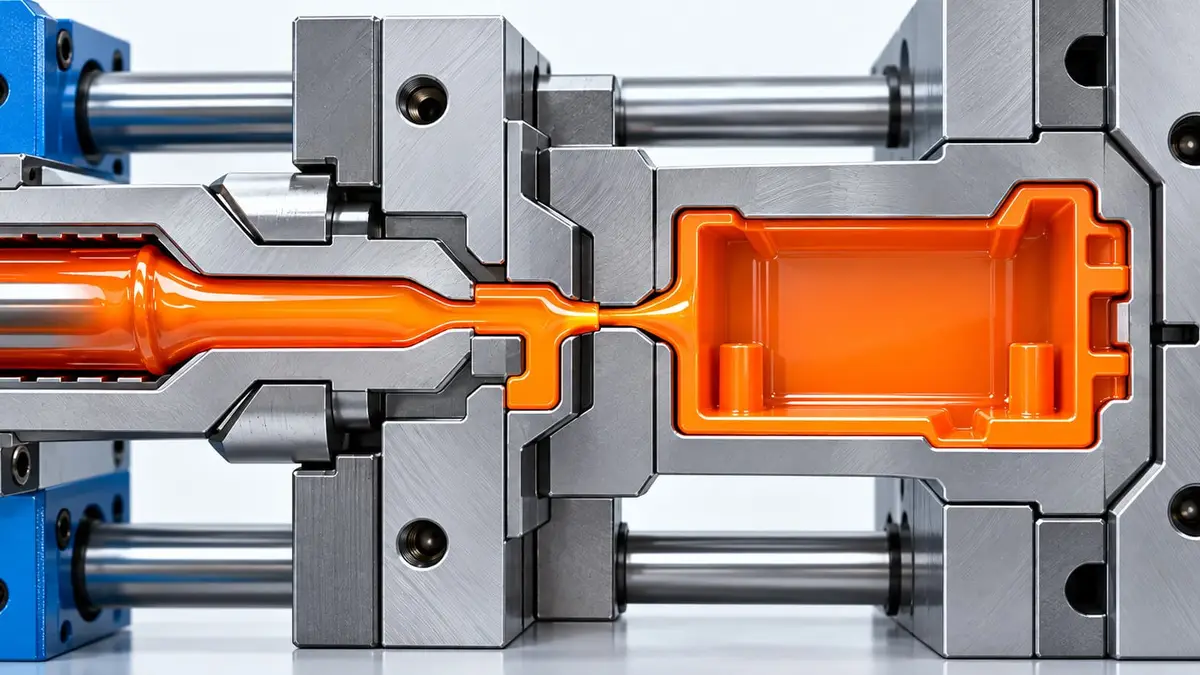
Definition of Gate
A gate is the controlled restriction between the runner and the cavity. Its size and shape influence fill rate, shear heating, pack behavior, and how cleanly the part separates from the runner at ejection.
Common gate types include edge (tab), submarine (tunnel), direct (sprue), and hot-tip gates. Selection depends on material, part geometry, cosmetic requirements, and whether the gate mark must be hidden or minimized.
Why It Matters for Plastic Injection Molding
Gate location and size affect weld-line position, surface appearance, and fill time. AMP engineers gate away from visible cosmetic surfaces when possible and tune gate geometry to avoid jetting or hesitation marks.
Gate design also determines whether parts can be de-gated by hand, robot, or in-mold. Smaller gates reduce vestige size but may increase pressure drop and risk of freeze-off before pack completes.