
Clamp Force
Last updated
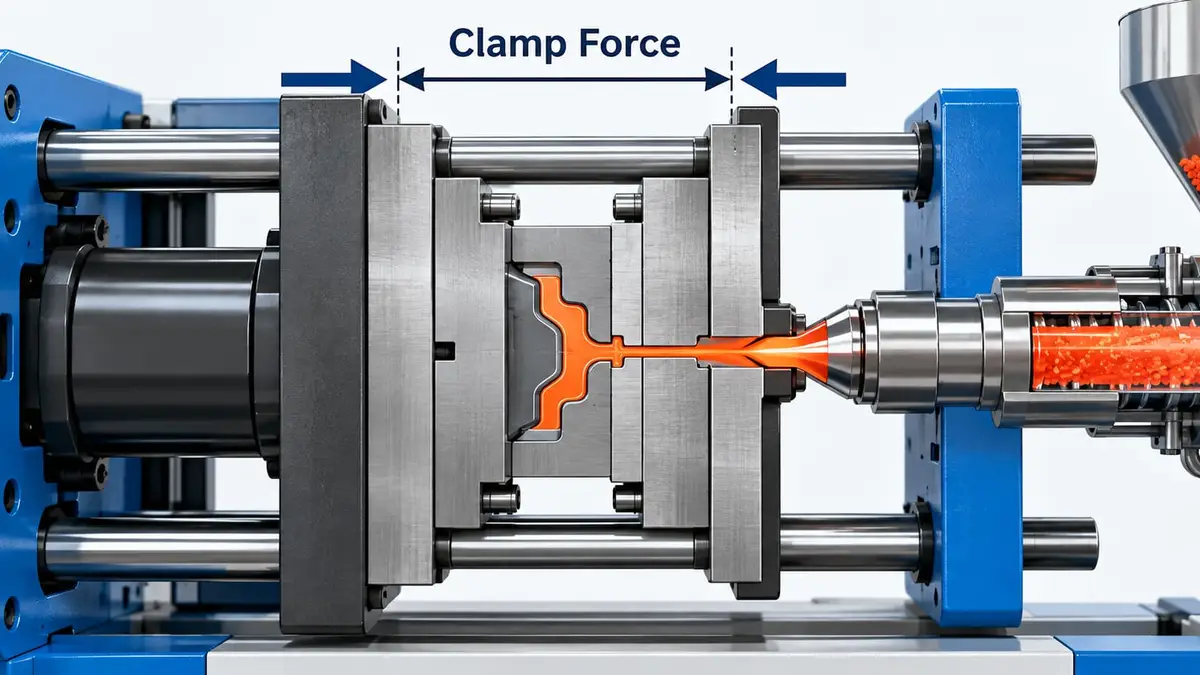
Definition of Clamp Force
Clamp force is the closing force an injection molding machine applies to hold the two mold halves together during the injection cycle. It is typically expressed in metric tons or kilonewtons and must exceed the total force trying to push the mold open while plastic is injected under pressure.
On a given shot, that separating force depends on projected area (the footprint of cavities, runners, and sprue facing the parting line) and the peak pressure inside the mold during fill and pack. If clamp force is too low, the parting line can flash; if it is far too high, the machine may be oversized for the job, wasting energy and floor space.
Why It Matters for Plastic Injection Molding
Matching clamp force to mold projected area and material viscosity helps AMP place each tool on an appropriately sized press. That supports consistent quality, shorter cycle times, and predictable unit economics on high-volume programs.
Insufficient clamp force allows melt to escape at the parting line, creating flash that adds trim labor and dimensional risk. Process engineers balance clamp tonnage with venting, gate size, and pack pressure so parts stay within spec without over-clamping.
Mold designers document projected area early so production teams can verify press capacity before first shot. A practical safety margin accounts for wear, process variation, and future cavity pressure changes when materials or gate geometry are tuned.