
ABS and Polypropylene Comparison
Last updated
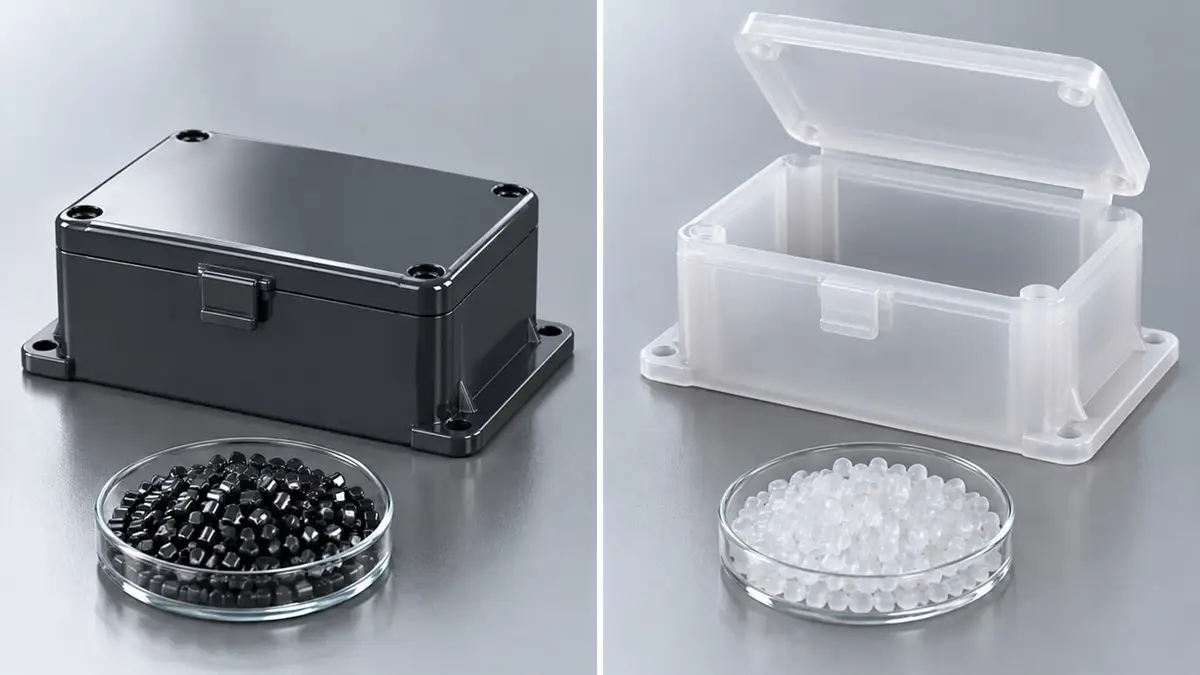
Definition of ABS and Polypropylene Comparison
An ABS and polypropylene comparison is an assessment of acrylonitrile butadiene styrene (ABS) against polypropylene (PP), the two commodity plastics most often considered together for housings, containers, appliance parts and automotive trim. ABS is an amorphous plastic, which means its molecules have no ordered structure, and it is made from three monomers: acrylonitrile for chemical resistance, butadiene rubber for toughness and styrene for rigidity and surface gloss. PP is a semi-crystalline polyolefin, meaning part of its structure forms ordered crystals as it cools, and it is sold as homopolymer, as impact copolymer and in talc-filled or glass-filled compounds. The comparison normally covers density, which is typically 1.04 to 1.06 grams per cubic centimeter for ABS and about 0.90 to 0.91 for PP, together with stiffness, impact strength at room and low temperature, heat resistance, chemical resistance, shrinkage and surface quality. It also covers how each material accepts secondary operations such as painting, chrome plating, pad printing, adhesive bonding and ultrasonic welding. Values are taken from grade datasheets tested to the same ISO methods so that the two materials can be compared on equal terms.
Why This Matters for Your Business
PP usually gives the lower piece price, because it costs less per kilogram and its lower density yields more parts from each kilogram, which makes it the economical choice for containers, closures and clips. ABS costs more but gives a harder, glossier surface and can be painted, chrome plated or bonded directly, while PP needs flame or plasma treatment before paint or print will stay on, which adds a process step, cost and another source of rejects.
ABS also holds tighter tolerances and stays flatter on large parts, which matters for housings whose halves must fit together. PP parts with large flat areas are more prone to warpage and sink marks, and correcting them can mean tool changes and extra trial rounds, so the cheaper material can cost more in development time. In Taiwan's automotive aftermarket, which exports bumpers, grilles and trim to many markets, talc-filled PP is common for bumper covers and plated ABS for grilles.