
IQC, IPQC and FQC Inspection
Last updated
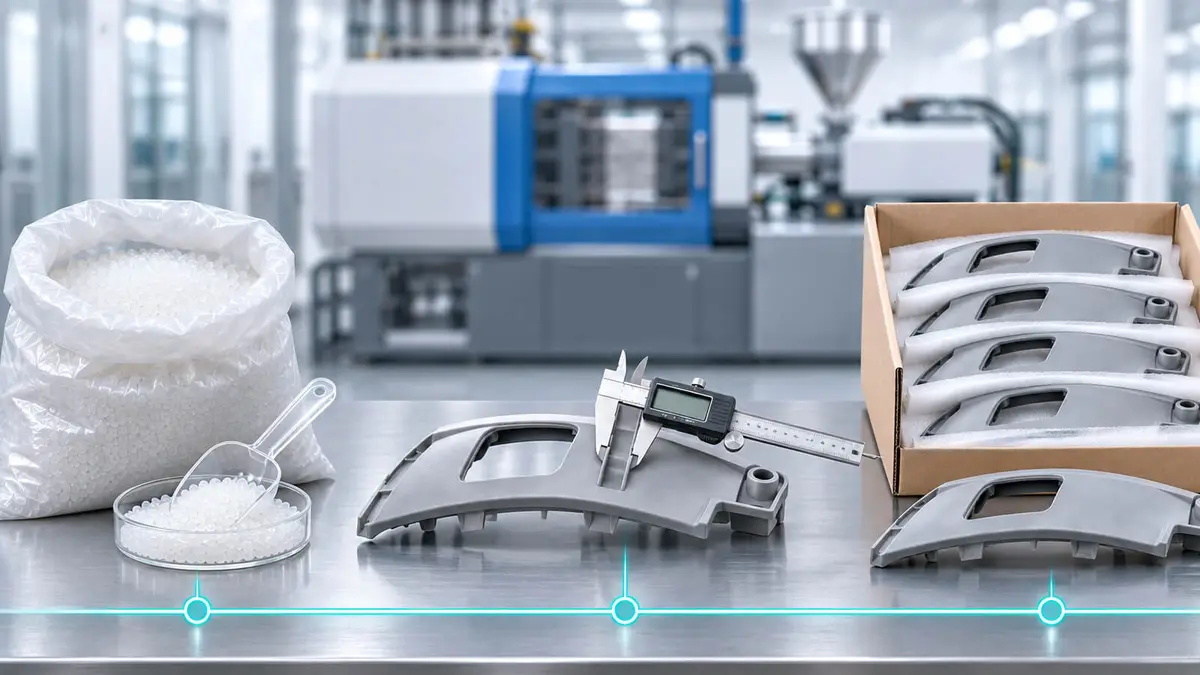
Definition of IQC, IPQC and FQC Inspection
IQC, IPQC and FQC inspection are the three checkpoints at which a factory checks quality as material moves through production. Incoming quality control (IQC) checks raw materials and bought-in components when they arrive, before they are released to production. In-process quality control (IPQC) checks parts while they are being made, through a first-piece check when a job starts and patrol checks at set intervals during the run. Final quality control (FQC) checks finished parts before they are packed, usually by sampling each lot. Some factories add outgoing quality control (OQC), a further check on packed goods before shipment. The abbreviations are standard in factories in Taiwan, China and Southeast Asia, while Western companies often call the same stages receiving inspection, in-process inspection and final inspection.
Why IQC, IPQC and FQC Inspection Matters for Your Business
Each checkpoint catches a different kind of problem, and a factory that relies mainly on FQC finds faults only after the whole lot has been molded. A wrong resin grade or wet material missed at IQC can affect every part in a run, and the scrap, the lost machine time and the delay all come after the event. IPQC is there to find a drifting process during the run, before a full lot is affected.
When you assess a molder, ask to see the inspection standard for each stage on a part similar to yours. For IQC on resin, look for a check of the grade and lot number against the purchase order. For materials that absorb water, such as nylon (PA66) and polycarbonate (PC), look also for moisture measurement, since wet material causes splay marks, silver streaks on the surface, and brittle parts. For IPQC, ask how often parts are checked, what is measured and what the operator does when a part fails. A record of shot weight, the weight of the plastic injected in each cycle, gives early warning of short shots or a change in the material.
If a molder's IPQC sheets show identical readings hour after hour, they may have been filled in from memory, and you should ask to watch a patrol check being made.