
Mold Trial Stages
Last updated
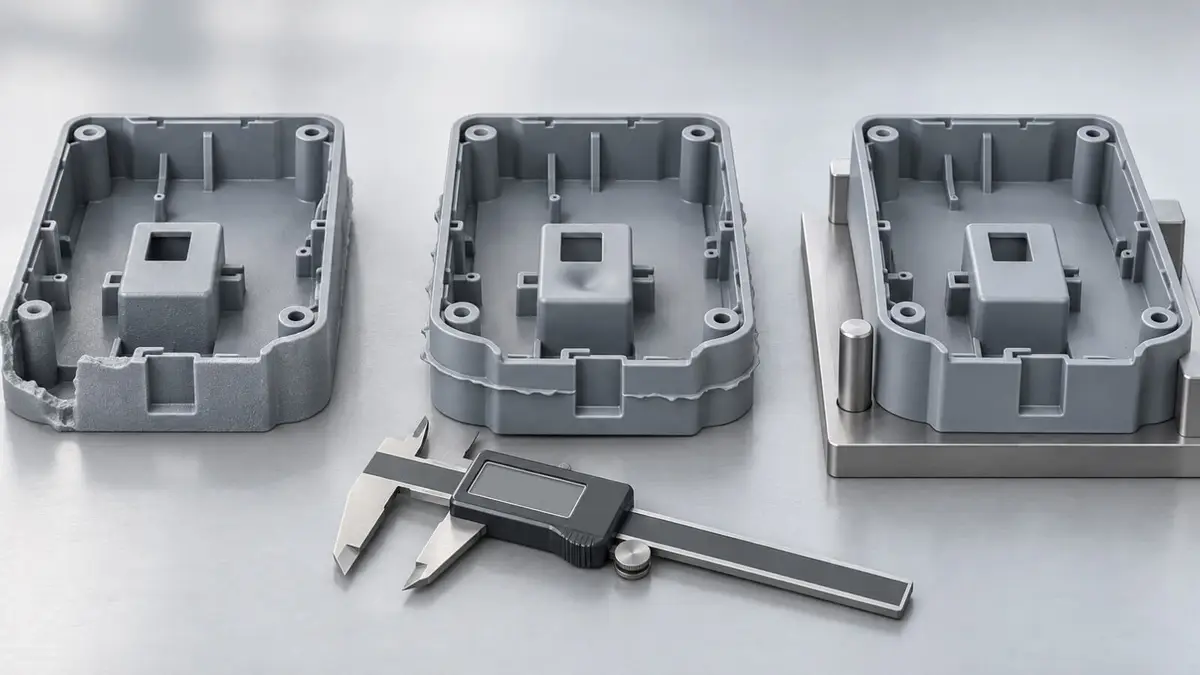
Definition of Mold Trial Stages
Mold trial stages are the numbered rounds of sampling a new injection mold passes through between first shot and production approval, normally written as T0, T1, T2 and occasionally T3. T0 is the builder's own first shot, run to confirm that the tool fills, ejects and closes safely, and the parts are often incomplete and stay in the toolroom. T1 is the first formal trial, producing parts you receive and measure against the drawing, with a dimensional report attached. T2 follows the corrections made after T1 and should be close to production condition, with cosmetic and functional checks completed.
Each round takes time, since the tool must come off the machine, be reworked and be refitted between trials.
Taiwanese and Southeast Asian builders generally quote two or three rounds within the tooling price and charge for any beyond that, particularly where the change came from your side, so agree the allowance and the engineering change terms in the purchase order.
Why Mold Trial Stages Matter for Your Business
Tooling schedules slip at the trial stage more often than anywhere else, and the reason is usually arithmetic rather than incompetence. A builder quoting eight weeks is generally quoting to T1, and the four to six weeks that T1 rework can take are left out of the conversation entirely. Build the rounds into your launch plan rather than treating them as contingency.
Who pays for each round is the second question, and it is better asked before the first trial than after the third. Corrections arising from the builder's workmanship are his to make good, while changes to your part design after the steel is cut are normally chargeable, and the boundary between the two is where most disputes begin.
Trials give you your only sight of the tool before you commit to production. Ask for parts from every round, including T0 where the builder will release them, along with short-shot samples and the dimensional report, since these tell you far more about the tool than one approved part does.