
Recycled Plastic Injection Molding
Last updated
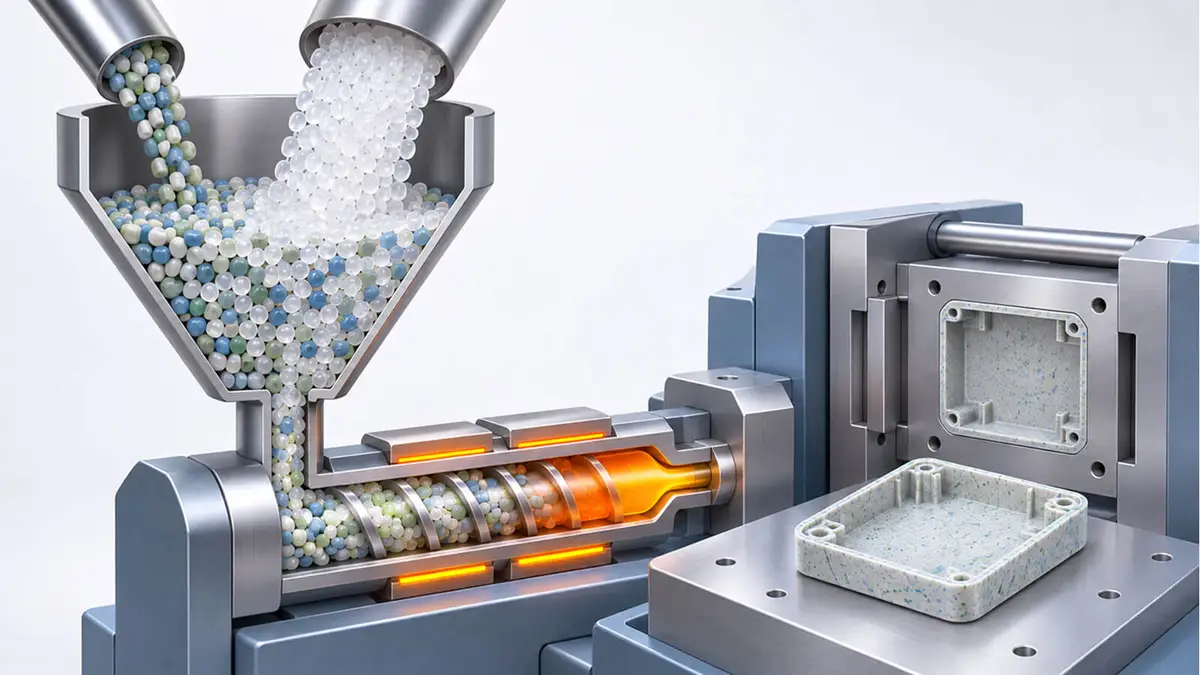
Definition of Recycled Plastic Injection Molding
Recycled plastic injection molding is the molding of parts from recycled resin, either alone or blended with virgin resin at a stated percentage. The recycled content is usually post-consumer recycled (PCR) material, recovered from products that have been used and discarded, or post-industrial recycled (PIR) material, recovered from manufacturing scrap before it reaches a consumer. Most of it is mechanically recycled, meaning the plastic is sorted, washed, melted and pelletized, though chemically recycled feedstock is also available for some polymers. In-house regrind made from a molder's own runners and rejected parts is normally treated separately. Recycled content is specified as a percentage by weight of the part and verified through chain-of-custody certification, such as the Global Recycled Standard (GRS) or UL 2809.
Why This Matters for Your Business
Recycled resin varies more from lot to lot than virgin resin, and that variation shows up in production. Changes in melt flow rate, which measures how easily the melted plastic flows, shift fill and dimensions and mean the molder has to adjust settings more often. Mixed sources give a gray or off-white base color, which limits light and bright colors, and contamination can cause black specks, gels, odor and lower impact strength. These effects raise reject rates and call for closer incoming inspection, both of which add to the piece price.
Price and supply are also less predictable, since high-quality PCR grades often cost as much as or more than virgin resin and supply can be tight, so check lead times for your grade and color before you commit to a launch date. Demand is rising because of regulation, including the EU Packaging and Packaging Waste Regulation, which sets minimum recycled content for plastic packaging from 2030, and because of brand targets in consumer goods and automotive. Taiwan has a mature collection and recycling system, and local compounders supply PCR grades of polypropylene, acrylonitrile butadiene styrene (ABS) and polyethylene terephthalate (PET), which shortens the supply chain for parts molded there for export.