
Production Part Approval Process (PPAP)
Last updated
Definition of Production Part Approval Process (PPAP)
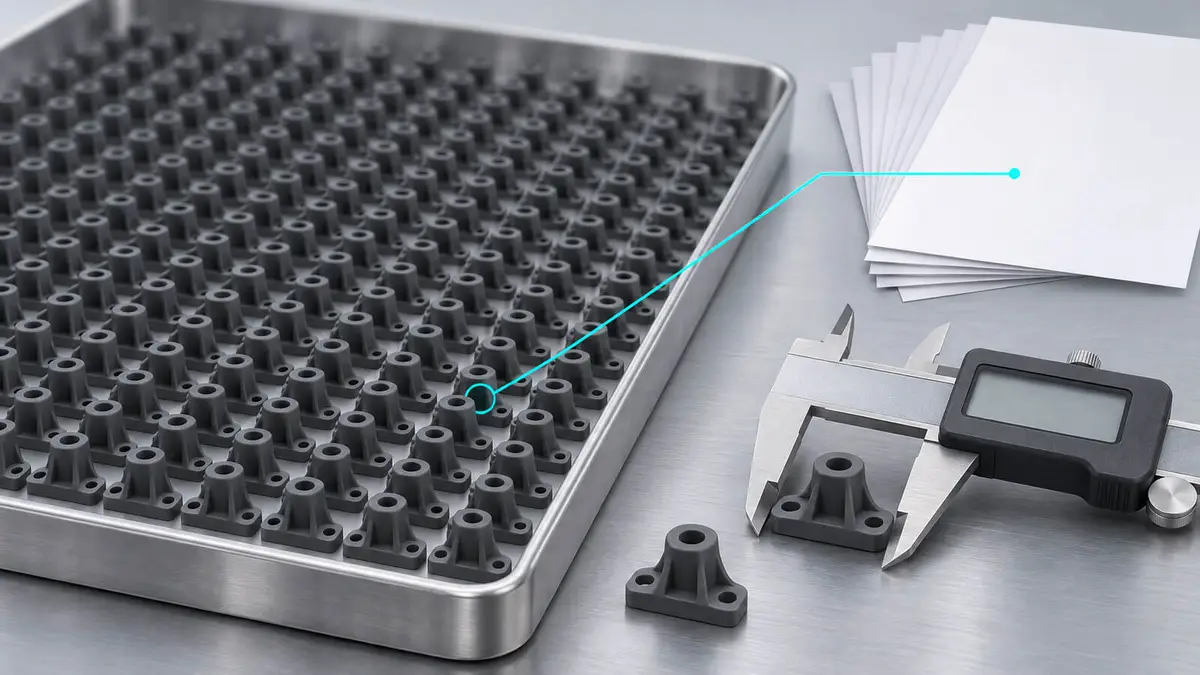
The Production Part Approval Process (PPAP) is the automotive industry's method for showing a customer that a supplier's production process can make parts that meet every design requirement, consistently and under real production conditions. It is defined in the PPAP manual published by the Automotive Industry Action Group (AIAG), now in its fourth edition, and it is one of the core tools required under IATF 16949. A PPAP package can contain up to 18 elements. These include dimensional results, material test results, the process failure mode and effects analysis (PFMEA), the control plan, measurement system analysis and initial process studies, which are statistical measures of how tightly the process holds a dimension. The package is summarized on the Part Submission Warrant (PSW), a one-page declaration signed by the supplier. The parts and data must come from a significant production run made with the production tool, materials, operators and settings, typically lasting one to eight hours and producing at least 300 consecutive parts unless the customer states otherwise. The customer's signature on the PSW approves the part for production shipments.
Why Production Part Approval Process (PPAP) Matters for Your Business
PPAP approval is usually the last gate before your launch, so a rejected or late submission delays every shipment behind it. The common causes are dimensions that fail on one cavity of a multi-cavity tool, capability results that fall short of the customer's target, and documents prepared against an older revision of the drawing. Each one sends the supplier back to adjust the tool or the process and rerun the parts, which can cost several weeks.
Once the PSW is signed, the supplier must tell you before it changes anything that could affect the part, such as the material grade, the tool, the press or the production site. You may then require a new submission. A molder that moves your tool to another plant without notice has broken that agreement, even if the parts still measure correctly.
To avoid disputes, state the submission level, the required elements and the capability target in your request for quotation. The cost of the production run, the measurements and the paperwork then appears in the quote instead of arriving later as an unexpected charge.